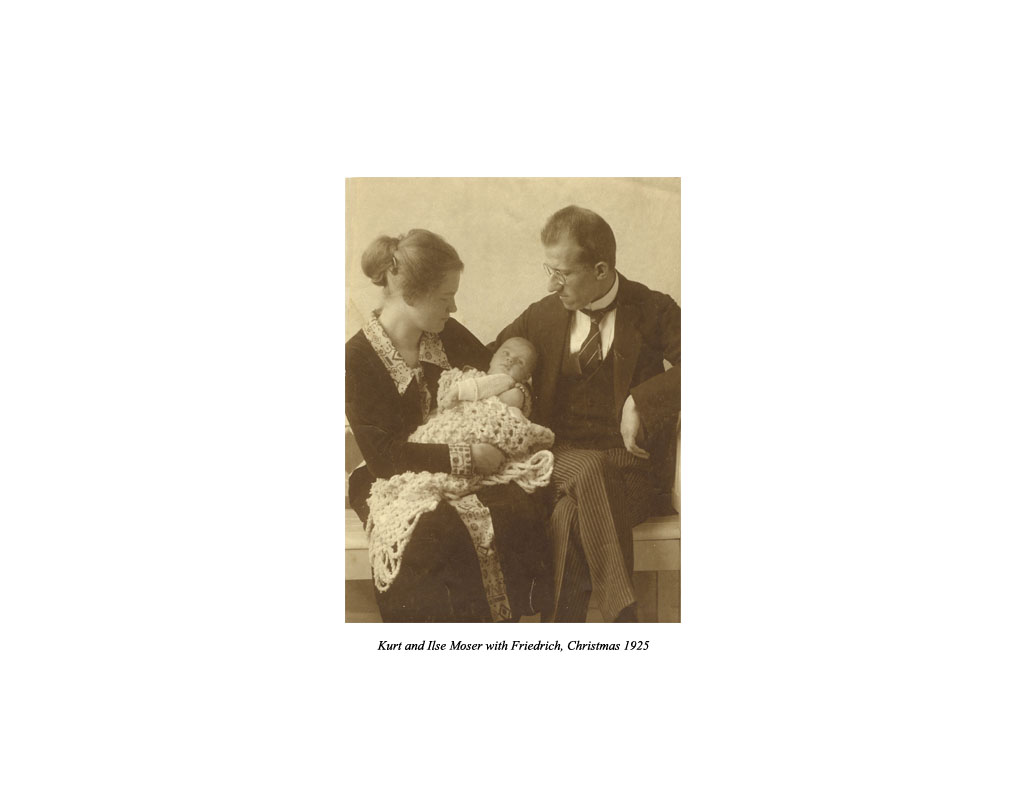
It is both coincidental and ironic that these letters, written by my uncle Friedrich while he was serving in the German army, have made their way to the Internet at this date, which is marked by the 60th anniversary of the end of World War II.
One has only to glimpse at these letters to realize that while the events took place decades ago in a different country, Friedrich's plight was virtually identical to that of any soldier of yesterday, today or tomorrow, stationed anywhere in the world. Conditions were difficult both mentally and physically and emotions ran the gamut from to joy to disillusionment (usually more the latter than the former).
For this reason, among others, I believe it is important to ensure these letters are made avaliable to those who might learn something from them about the nature of war and its effects on individuals.
After the War, Friedrich's parents (my grandparents) wrote their own memoirs which give an idea of what life was like in Germany in the early 20th century.
--Kim Moser, 11 May 2005
Friedrich Moser
Letters from 1943 to 1945
Andreas Stuhlmann and Franziska Leuchtenberger produced the transcription into the modern German script from the original letters
Klaus T. Moser-Maync, with the help of his family, translated the German text into English
Table of Contents
Three Letters from Leißienen/District of Wehlau from the Landdienstlager [Camp for Field Workers]
Reicharbeitsdienst (RAD) from 18 May, 1943 to 11 August, 1943
Wehrmachtsdienst [Army Service] Starting 16 August, 1943
Jupiter, FL, March 21, 2005
Dear Kim, Nicolai, Lucia, Nina, Lucy:
Producing this translation of my oldest brother’s letters into English was not an easy task, either technically or emotionally. I had to overcome several hurdles. As my father wrote in his cover letter to me, he decided to omit numerous mundane repetitions of receipts of letters and packages, etc. I, however, decided not to do that because I felt it was not my place to cut and edit but rather I wanted to keep the collection in its entirety. So I was faced with the problem of finding someone who could not only read the old German script (Fraktur) that was used in Germany until the 1940s, but who was also able to deal with Friedel’s already matured (some people might call it plainly hard-to-read) handwriting. Through sheer luck I came upon Andreas Stuhlmann and Franziska Leuchtenberger. To say they did an excellent job is an understatement. They not only labored over every detail, particularly when they came up against deciphering illegible words, but they also gained an impression of Friedel’s nature and spirit. That coming from someone who had never met Friedel showed me that his letter-writing style was more than just plain reporting (excuse me, Lucia, no offense intended!).
Andreas and Franziska had traveled to New York City when they presented me with their final transcription and they talked with me at length about their impression of Friedel. If only I had taped their conversation, because it’s difficult to reproduce what they had to say. Their observations were very sensible and eloquent and I was very touched by them. Lots of what they said agreed with what I already had heard about Friedel from my parents, Jürgen, and later from other still-living relatives who knew Friedel as a young man. Well, I hope you will also be able to get a picture of Friedel, somebody you never met.
When my parents presented me with the transcript of the letters in 1959 in Germany I was the same age as Friedel was when he perished on January 14, 1945. But to tell you the truth I was not ready to read them, let alone deal with them. Yes, I glanced at them here and there, but nothing more than that. Meanwhile, a few years later, having immigrated to the U.S.A., I remember showing them to Eve in the early 1960s, trying to give her a quick impression of them, but I started to cry and was unable to continue. So back they went on the shelf and it wasn’t until 2002, 40 years later, that I finally took that difficult step to attack that touchy subject. The finalization of my parents’ memoirs – both the German and the English versions – helped me to get to this point. I viewed Friedel’s letters as another component of my family history, and I felt I owed it to Friedel’s memory to give the younger English-speaking generation, such as you, an English translation. You see, even if you were able to read German, there are lots of things that are hard to get and require explanation. I have retained the explanation my father included in the German version in this English translation and I, as well as Andreas and Franziska, have added numerous comments. They all appear in [brackets] throughout the text. Sometimes I had real problems with military and technical words, for which I enlisted the help of Jörg Hahn, a distant relative on my Mother’s side, who had been in the Bundeswehr [German Army] in West Germany; and also Harald Vogel, one of Grete Vogel’s sons, who, as a native East Prussian, helped me out with some East Prussian words. All that is not to say that Friedel’s writing style is complicated; it’s not, but very straightforward and engaging, simlar to that of my Mother’s.
Please also keep in mind that Friedel was often rushed and had little time to write. He also used colloquialisms and slang, which were difficult to translate and made it hard to retain the flavor of his style. We also decided to keep the salutations and closings in German. In the 1990s my Mother entrusted me with the originals and they are now in my possession, archivally kept.
Being the last survivor of my family, I feel I should say a few words to help you to understand the times and the views that were held by my family when I grew up and what I heard and learned about the time when Germany was under the grip of Nazism. As you might know from Jürgen and me, our parents were strongly opposed to the Nazis since 1933, as well as the Communist system after 1945. They had enough perspective to see “behind the mirror,” the lies disguised by clever propaganda of both systems. And these views were carried over to us children so that we grew up to see through the political bullshit without being carried away by it. Unfortunately many people weren’t politically savvy enough and were seduced by it. So we will likely ask ourselves now why Friedrich was so determined to become an officer in the Wehrmacht and, when that failed, he couldn’t wait to get to the front. It seemed to contradict the anti-Nazi stand my parents held. In the early 1970s I once asked my father* about this and his answer was that Friedel wanted to defend his country. After more questioning about why this was so imperative in light of the losing battle he answered something along the lines of: “to keep our Rasse [race] from dying out.” I may not remember the exact sentence but I sure do remember that he used the word Rasse. I was really shocked that my father would use that word in this context; had he used the word Volk in the sense of “nation” it would not have seemed nearly as extreme. Well, I didn’t go any further in my query; I was still too young to effectively discuss such matters any further with my authoritarian father. But I sure was disappointed that my father had gone down that road. About ten years ago I read Victor Klemperer’s book, LTI, which deals with the language of the Third Reich [Nazi Germany]. One of the essays in it ends with a sentence that keeps impressing me to this day: “None of them were Nazis but they were all poisoned.” “None of them” refers to the characters in the story who were ordinary Germans but who were subconsciously poisoned by the Nazi propaganda. Many times I have found this quote to be applicable when dealing with people in the past and, to my dismay, the present. In my father’s case I think this poisoning is not derived from the Nazi doctrines but rather the racist Zeitgeist of the 19th century, from which the Nazis developed their “theories” of race.
But going back to the above-mentioned contradiction between the State and the military, those two powerful forces: many people, my parents among them, felt that the German Wehrmacht was subverted by the Nazi regime for its despicable deeds. I see their point but I can’t agree with it, because that’s what governments always do when they use the military for aggression, as opposed to defense. Aggression is usually followed by a corruption of values, resulting in such things as war crimes and other atrocities, etc. It was in the 1950s, after the East German state was established, along with their armed forces, when my father and I observed a group of soldiers in public and he made disparaging remarks about their lack of dash and their rather aloof conduct. It didn’t go over well with him and I felt him express a sense of nostalgia when he said that our old army certainly didn’t look as shabby as them and wouldn’t have behaved that way in public. Well, no, he wasn’t referring to the Wehrmacht, but to the army he served under during World War I. It was a certain pride he had saved. These feelings were also likely coming into play during Friedel’s decision to become an officer. I always find it a bit strange that my parents’ nostalgia about the military never entirely went away, especially since they were the victims of two world wars; mind you, my parents hated war, though, particularly the second World War, because of the loss of Friedel, their home, and possessions, and their Heimat [homeland]. As you can figure out yourself, I was about five years old when I saw Friedel for the last time in October, 1944. My visual memory is “schemenhaft” [cloudy]. I remember him only as a silhouette standing in front of a window of our Königsberg apartment that faced the street. Everything else I know about him comes from pictures and stories told. But I still find it baffling how, after 60 years and having barely known him, I still have such strong feelings for him and vehemently resent being robbed of him. My mother*, whose feelings for Friedel were of course infinitely more painful than mine, tried everything in her power to find out about Friedel’s fate, even after 1989 as records about POWs in Russia became available. Somehow she kept open the possibility that Friedel had become a POW and had died in the gulags in the Soviet Union. But at the time of Friedel’s disappearance there was such chaos that the Russian troops simply didn’t bother to take prisoners, let alone bury the enemy’s dead.
In 1996 I went with Krzysztof Malczewski, a good friend of mine who lives in Warsaw, to the area where Friedel went missing in action, where we saw lots of dilapidated Soviet war memorials. We really got the impression of what a terrible carnage must have taken place there. Needless to say, no memorials to fallen German soldiers exist there. So these letters represent the only tangible remains of Friedel. And, yes, I have a gold ring with a broken stone.
Friedel was born on August 31, 1925, in Königsberg. According to our mother, Friedel was not named after any ancestors named Friedrich but after a character in a book (Familie Pfäffling) named Friedel (a diminutive of Friedrich). In addition, her brother, who died as a teenager, was named Fritz (another diminutive of Friedrich). Friedrich’s middle names were Robert, after our father’s (step)father, Robert Moser, and Ernst, after our mother’s father, Ernst Strehlke. Friedel perished on January 14, 1945, at the age of 19 years and 4 ½ months.
Klaus T. Moser-Maync
Stralsund, February 1st, 1959
Mein lieber Klaus!
Enclosed are the letters of your oldest brother, who loved you very much. Mutti collected and saved them all through the chaos of the war and our flight. There was one funny time when you were still very little and had an ear infection, which we treated and cured on our own. Friedel grew very worried about you and anxiously cried, “Go ahead, don’t call the doctor, but don't be surprised if he eventually dies!” Well, you didn’t die. He often asked about you in his letters, and he nearly aways told us to give you his love. Thus his last letter ends with your name.
The letters from his time in the Reichsarbeitsdienst [State Work Service] as well as his subsequent military service represent his legacy in a sense. They suffered during that time, which is why, with Mutti’s encouragement, I copied and excerpted them, skipping repetitive and mundane details, like his confirming the receipt of packages and things like that. You and Jürgen are each getting a copy. Besides the fact that you have probably forgotten by now how to read the old German script Friedel used, his writing is quite difficult to read. I am sure, then, that the typed version will make it easier or even possible for you to read and understand.
You probably have only a vague memory of Friedel since you were quite little when he was still at home. Therefore I want to tell you a few more things about him that might help you understand some of the excerpts.
Our dear oldest son was not chosen to be a particularly happy or lucky child; the good fairies obviously disagreed at his cradle. Opposing forces operated within his soul. While tender and sensitive, he had a blunt side. He was headstrong but also had a strong sense of fairness, which often caused conflicts with himself and the people around him. These tendencies were already evident at a young age. – He was a unique child but not always easy to handle, and became known for saying, “Fiedel kann nicht, Fiedel will nicht, Fiedel bauch auch nicht!” [Friedel can’t, Friedel won’t, and Friedel doesn't have to, either!”] His personality especially caused him trouble as an adolescent, both within himself and with others. At the same time, he was quite open-minded, full of humor, and well-liked by his friends. His sensitivity often caused him to behave severely but not always appropriately, though.
On top of everything else, he had the disadvantage of having been born during political conflict, which made things even worse for him.
First there was school, which was not really his cup of tea, although with Mutti’s unremitting help he always made it to the next grade. After grade school he went to a humanistisches Gymnasium [high school for humanities]. Under the Nazis, the curriculum constantly changed. Had he failed a class, which otherwise would not have been significant, it would have been difficult to make the transition to the next grade. When he had trouble, we put him in a private school, where he got his Obersekunda diploma, the former so-called Einjährige [diploma received in 10th grade or two years before high school diploma]. Unfortunately, the quality of his teachers and fellow students left something to be desired, which led to more problems. One teacher he was particularly fond of, for example, was disciplined, which, because of the Nazi brutality, ultimately led to his decapitation. [My parents mentioned that this teacher was found out to be gay]. Naturally that devastated Friedel.
Making matters worse, Friedel’s brother, three years his junior, achieved everything easily that he, the older one, had to work for so hard for. That may have led him to question himself all the more, but importantly, it never overshadowed the love between the two, and did not keep Friedel from being very proud of his younger brother.
The braune Nazizeit caused conflicts for Friedel early on. At first, they were everyday things. First, in 1933, there was the famous “hat incident.” Friedel had a cute little hat, similar to the uniform hats of the youngest group of the Hitlerpimpfe [derogatory name for Hitler Youth members]. Friedel was playing on the street when a pompous, dumb, fanatic bully knocked his hat right off his head, saying only members of the Hitler Youth were allowed to wear that kind of hat. As you can imagine we did not keep quiet about things like that, but such unfortunate things happened quite often to our dear Friedel. We actually got into a lot of trouble with the Hitler Youth because we lived on the street called the Vorderrossgarten where there were particularly ugly representatives of this organization. When Friedel had to join like everyone else, he saw a lot of crudeness, meanness, and obscenity that greatly offended him. All of this probably contributed to the imbalance and distress he suffered during adolescence.
His increasing aversion to Nazism that had infected even the Wehrmacht led to his greatest disappointment, namely his failure to be made an officer. He had always been quite critical, and soon detected the deceit and corruption of the “brown regime” as it permeated the military. Being as open, honest, and sincere as he was, he could not help but wear his heart on his sleeve.
After he finished high school, the question of which profession to go into came up, and Friedel was not at all sure what he wanted to do. Things like choosing a career were even more difficult back then than they are now because of the war. Furthermore, he was about to be called up by the RAD because he was 17 years old. Thus we decided to send him to Schönwalde for the time being. While at the RAD he got the idea to apply to be an officer. This idea seemed to come more from some kind of embarrassment or insecurity than a real desire to be a soldier. [In his lettters, “O.B.” stands for”Offiziersbewerber” (officer applicant).] We were not fond of the idea from the beginning, but naturally we let him do what he wanted because he was going to be drafted by the Wehrmacht soon anyway. – Unfortunately, though, he fell and hurt his knee in Schönwalde. He tore a ligament, and even though it healed, it continued to bother him during training. He decided to have an operation so he could stay in the army. A good friend of ours, Professor Müeller, performed the operation. He was the director of the orthopedic hospital in Königsberg. I am sure you have heard us mention his name. Mutti and his wife still write to each other. Professor Müeller died soon after the war. He used a new type of operation, which left a silver nail in the joint. Friedel was very proud of it. The operation went well, but his knee problem apparently gave the Wehrmacht an excuse to deny him a career as an officer.
But these problems did not occur until he went to Eisenach. During training in Zinten everything went well. Friedel was happy, easygoing, and well-liked by his comrades and superiors. This started to change in Eisenach, where they worked under the worst conditions. Worst of all, though, was the disgusting political intrigue. His letters clearly reflect his aversion to and rebellion against it, which we felt were very justified. I answered an impertinent letter of his regiment's commander in a way that could not be more clear. We tried to comfort Friedel as much as we could, but by that time he hated everything. He longed to get out of the unbearable atmosphere in Eisenach and go to the danger zone at the front, where he hoped things would be more fair. Furthermore, he was deeply shocked by the destruction of his homeland by enemy bombing. As his melancholy letters illustrate, he seemed to see the whole situation as hopeless. His mood was also apparent in a picture of him from that time as well. Then he volunteered to go to the front to defend his East Prussian homeland. His wish was granted. He became a little more carefree in his letters, but they were overshadowed by melancholy and disappointment, as well as concern for our lives, until the very end.
He wrote his last letter on January 12th, 1945, at the beginning of the big Russian offensive, which led to the encirclement and destruction of Königsberg and during which Friedel died in his second mission against the enemy. We did not hear about it until February 8th, 1945. His lieutenant came by in person to tell me because Friedel's tank regiment had returned to Königsberg in the meantime. He explained that the tanks had been under heavy attack. While they had all returned from that mission, Friedel was the only one missing. He had taken cover next to the tanks, seeking protection from the enemy attacks. He probably died in the area of Schlossberg (Pillkallen and Gumbinnen). The lieutenant went on to describe how everybody had liked Friedel, and praised his willingness to be of service.
A few weeks later, February 24, 1945, we had to flee Königsberg, which already had been under attack for weeks. Despite our efforts, we have never been able to find out anything else about Friedel's fate, not even through the DRK [Deutsches Rotes Kreuz (German Red Cross)]. We also never got any of his things, leaving us with only his letters and a ring he received from family in Schönwalde and left at home to remember him by. You shall get it later.
You can imagine, dear Klaus, that Friedel's destiny bears heavily on us, especially because he had been our problem child in some ways. During the last few years of his life, he overcame his troubles, which had sometimes caused tensions at home, and found himself. Again and again he wrote about his attachment, loyalty, love, and concern for us. Then he was snatched away from us. His early death was particularly tragic for us. He was only 19 years old, like you are now. Of course, many millions of people met with a similar fate. It is somewhat comforting to know that he was serving the way he wanted to and that he was spared many difficulties after the collapse. That is small comfort, though.
A good musician friend of ours in Königsberg once called Friedel the romantic of the two brothers. I thought of that while I copied the letters, which express that trait. They are very descriptive and impressive. Lastly, I just want to mention that I will make some explanatory notes here and there as I go through the copies again so they will make sense to you.
Stralsund, February 1959
Mein lieber Jürgen,
Friedel's letters from his time at the RAD and the army and which Mutti saved and collected are starting to suffer from the ravages of time, so I decided to copy them for you and Klaus. They are the only things of his that we own. They constitute his legacy, and I presume that you'll treasure them as a memory.
Since Klaus was very young at the time and has only a vague memory of his oldest brother, I wrote a bit about Friedel's development, something that you don't need. I also added a few explanations.
While copying and reading the letters, the horrible past and the tragedy of Friedel's death came to life again. We are totally convinced that he was declined as an active officer – his most bitter disappointment – because he rejected the Nazi regime, which had already undermined the military. Indeed, Friedel was very critical, fair, and honest, and soon saw through the dishonesty, rottenness, and corruption of the time. Because of his straightforward and uncompromising nature he could not help wearing his heart on his sleeve. We tried to comfort him, and my letter to his colonel in Eisenach – where the conditions and political intrigues were the worst, and his letters were undoubtedly opened by the censor – did not lack for clarity. But Friedel was sick of everything, including the terrible impact of the air raids in the homeland. He was energetic and happy when he was in Zinten, liked by his buddies and superiors, being the joker of the whole cadet class, but he became increasingly resigned and depressed. His letters took on a more melancholy tone; his mood change was also evident in a photo from that time. In his last days he recognized the hopelessness of the whole situation and was very concerned about our fate as well. That's when he transferred to the front, to an East Prussian tank unit, in search of a better atmosphere. That wish, which also became his fate, was granted!
You know, dear Jürgen, that as an adolescent our Friedel was not particularly well-adjusted, which sometimes made his life difficult. All that changed with time. He became touchingly affectionate, as shown by the love and concern for us expressed in his letters. That he was snatched away from us then makes his tragedy especially hard to bear, despite our knowing he was one of millions and may have been spared a lot of suffering.
At the end I added letters of his friend Albrecht Thomasius*, whom you maybe also knew. He was a little older than Friedel and had a good influence on him. He had a hard time getting over his long internment as a prisoner of war and is still in professional limbo!
I hope these lines and the copies of these letters reach you well.
* * * * *
Leißienen (Kreis Wehlau), 15 August, 1942 *
L.M. [Liebe Mutti]
I arrived here well. Have little time to write. The food is good so far. I'm returning the leftover ration cards. Please buy me something with the cake ration cards and send it to me. It's a rather large Domäene [estate] (12,000 Morgen) [7,413 US acres].
Viele Grüße von Friedrich
Leißienen, Sunday [16 August 1942]
Liebe Eltern!
I hope you received my last letter with the ration cards. For the cake ration cards you could send me Stritzel [a kind of coffee cake] or rolls. On our first day we cleaned a stable. Yesterday we tied and set up Hocken [grain sheafs] on the field. I will try to get a leave for my birthday [August 31]. The food is actually very good. At 7 a.m. we get six sandwiches. The next meal is not until 12 Noon. There is no food in between so we stay hungry. The same happens between 1 p.m. and 8 p.m. At 10 p.m. it's lights out. We are attached to a Hitler Youth Camp. Yesterday I went out with three other guys to go äppeln [scrounging apples], but we only took what we could eat. We also had to work this afternoon. Yesterday I tripped and fell so badly over two stones and fell that my leg swelled up a bit. If it starts hurting, I will come home immediately.
[Leißienen,] 13 August, 1942 [postmarked 19 August, 1942]
L.E. [Liebe Eltern]
Many thanks for the letter. You wanted to know how I am doing. Not too great. Please don't send any more mail after Sunday. I will let you know more later. We might be home by then. I will tell you why in private. Anyway, we have fleas here and we are getting water soup [and] vegetable soup to eat and are being exploited to the utmost. We will not put up with working 8 hours without food anymore. We are sleeping in an old chicken coop. The conditions are abominable. Please also tell Otiti* that I can only get mail until Sunday for the time being.
Grüße Friedrich
[Marginal note:] Don't send food until I request it. For now, don't withdraw my police registration.
[RAD – Reichsarbeitsdienst; a construction and maintenance unit in which one year’s participation was mandatory. Friedrich served only three months because he was drafted. It was not part of the military, but had a paramilitary role. He served from May 18 to August 11, 1943.]
Deeden, 19 May, 1943
Liebe Eltern!
I arrived here O.K. at the RAD camp [Reichsarbeitsdienst-Lager]. The train trip was less than pleasant because I had to stand until Wehlau. At the train station I met up with a few other guys who were also making the trip. Fortunately we got a ride to the camp on a horse-drawn carriage. We received clothing like Drillichzeug [fatigues], Knobelbecher [slang: boots], sneakers, long johns, Fusslappen [foot wrappings], day shirt, etc., right away. It was all quite nice. In the evening we even got a warm meal. There was so much bread that I can send some home. By the way, your sandwiches and eggs were excellent. At night it was a bit chilly, but you get used to it. Making the bed worked out okay. We always get up at 6:30, which is pretty shitty. [He spells out the word beschissen only partially: “besch...”] We will probably stay here 4-6 weeks and then go to Moosbruch or someplace else. I will send my stuff to you soon. Unfortunately I will have to include the books because they will not fit into my Affen [slang: backpack], which is already stuffed. I already know some of the guys in my room. It might interest Jürgen that one of them is Hölzer. Enough for today. You will hear from me shortly.
Viele Grüße. Euer Friedrich
RAD Abteilung 7/14/Deeden/Eydtkau
Deeden, 20 May, 1943
Liebe Mutti!
I will send you a few lines since I have a few free minutes. Let me start with some wishes. First, I’d appreciate if you could send me my orthotics. Also, I wouldn’t mind if you laid a few cigarettes on me as we will not get any more until the beginning of next month. This evening we each got three oranges, which was rather nice. As Hans Decker* already mentioned, all of our movements in the yard are done in double time. Don’t be surprised if you haven’t gotten my suitcase yet, because there was no means of transportation. I’m running out of ink and I still have to shine my boots, so I will stop.
Mit vielen Grüßen an Herrn Decker u. Familie verbliebe ich als Dein Friedrich
Deeden, 23 May, 1943
Liebe Mutti!
Yesterday I received your lovely letter, which made me very happy, and I thank you for it. Unfortunately I have to return the books I took with me because I have hardly any room for them. We are supposed to get even more stuff today, and I barely have room for it. Unfortunately, today our Zug [platoon of about 30 men] is Zug von Dienst [platoon on duty], so we have very little free time, even on Sunday. Our Zug will be cleaning the latrines, laundry building, kitchen and several other rooms. Since we are not allowed to have more than 5 Marks, I will send home my moola in rates of 5 RM [Reichsmark]. You can put it into my savings account when you get a chance. Yesterday, Saturday, was pretty uneventful. We now get up at 5:30 a.m. on weekdays. Supposedly it will be moved back to 5 a.m. in the future. We are given 5 minutes to wash up, and then we have breakfast. Everybody gets a heaping tablespoon of jam, 4-5 slices of bread, and unlimited coffee. Then the Stubendienst [cleaning duty] cleans our room, which holds 16 men and one Vormann [frontman]. After that comes the Flaggenparade [flag-hoisting ceremony] at 7 a.m., and then we go on duty. On Saturday our chief reviews the main events of the previous week. At 10 a.m. we have a second breakfast. We get three slices of bread and some kind of soup. That is followed by Ordnungsdienst [literally “order duty,” it means “drill exercise.” Friedrich explains it further in his letter of May 30, 1943]. At 12:30 p.m. we have lunch. Yesterday we each got one bratwurst with potatoes and sauce. Lunch goes until 2 p.m. From 2 to 6 we have Ordnungsdienst and other nice things. After supper, which is also rather nice, we have free time until our 9 p.m. Zapfenstreich [bedtime/lights out] hot shower. On Saturday we always have a five-minute hot shower, which is really nice. A collection was taken for the Red Cross today. Our room “voluntarily” gave around 100 RM. I will tell you more about it when I get home. If you have time, could you send me my suspenders? My pants are slipping like crazy. The story about G. [H.?] is pretty nice. I would have fired her. Hölzer has a camera, so you don’t have to bother sending me mine. Has Günther [Bahr]* written already? I will stop now because I am running out of time.
Mit vielen Grüßen an alle, Dein Friedrich
P.S. By the way, you asked where I sleep. I sleep on the bottom bunk, which is definitely the better choice. Happy 20th wedding anniversary to you both.
25 May, 1943
Liebe Mutti!
I just wanted to send you my cake ration card and the rest of my money. Yesterday I got a Raucherkarte [tobacco ration card]. Unfortunately your package hasn’t arrived yet. I’m looking forward to getting it. My suitcase still has not been sent out. Yesterday a train with a car of burning straw passed by. We helped put out the fire. Trains are always passing by, loaded with tanks and other nice articles. Today we received Tuchzeug [clothes], and I was able to get a great coat. I have to close now because I have Stubendienst [room-cleaning duty]. Soon I will not be able to write much because we are getting a lot of work. The day before yesterday we practiced Spatengriffe [spade drills] for the first time...
P.S. The Red Cross collection totaled 4,500 RM. I gave 10 RM [?], for that [?] I gave nothing.
Deeden, 30 May, 1943
Liebe Mutti!
Many thanks for your letter, which arrived yesterday, and for the package with the orthotics, which also came yesterday. Thanks especially for the latter. I will eat the cake this afternoon. I started eating the little cakes as soon as I opened the package. They tasted nifty. The cigarettes weren't too shabby, either. I was especially delighted to get them but I have to ask you not to send me any more because we get 12 cigarettes for each double coupon of the tobacco ration card. I have enough to last a lifetime. But I will save the extras and give them to Albrecht [Thomasius] or someone else. There was a lot of confusion in our room; for one thing, the entire room was taken apart from top to bottom. You should have seen our room, with lockers turned over, etc. Of course we couldn’t clean up in time, so the duty chief chased us around the yard a few times. It was a real drag, because my muscles were still really sore from an earlier 8 km run. Several guys puked after the run, and almost half of them collapsed. I got through it. You asked me what Ordnungsdienst is. Ordnungsdienst is 3 hours a day of marching like robots while doing links rum [left turns], rechts rum [right turns], stillgestanden [halt] and Spatengriffe [spade drills]. We play an awful lot of sports, almost 2 hours a day. We run around the sports track for 10 minutes in the mornings. I don’t feel any pain in my knee. There is no chance of getting any leave before we get sworn in, so I will not need your ration cards for now. I was taken away from writing this letter for 3 hours because a few of my roommates and I had to dig up a field. The reason for this Sunday diversion was that during inspection yesterday someone found a few grains of sand under our boots. Well, that’s how it goes! We are all going to the movies in Eydtkau at 2 p.m. tomorrow. The movie is “Der Dunkle Tag” [The Dark Day]. Exciting, huh? During one of our recent cross-country runs we saw a few bunkers of the Ostwall*. They were incredible monsters. Again, thanks a lot for the package and the letter. The other packages you already mentioned will get here soon.
Mit vielen Grüßen verbleibe ich als Dein Friedrich
P.S. Greetings to the other “inhabitants” [possibly people or relatives staying at parents’ house]. Thanks to your package, I at least have nice toilet paper again, which is so scarce here that we are looking for it in the garbage.
Deeden, 2 June, 1943
Liebe Mutti!
Your second package arrived here yesterday. Thank you. The ink, cigarettes and especially suspenders are very handy. Along with this postcard I'm sending off a package with 3 oranges, which we got for dinner today. Klaus will be delighted. If you write me again, please include a few postage stamps; I am running low because of this package I'm sending. Thanks a lot too for the NSKK Mann [Nationalsozialistisches Kraftfahrer-Korps – National Socialist Motor Vehicle Corps; he probably means a textbook for motor vehicle drivers].
4 June, 1943 [?]
Liebe Mutti!
Enclosed are the old ... [?], the gloves etc., which I have no use for. Excuse my bad handwriting, but I'm writing in bed. I read the books. I liked them. So did several of my buddies in the room. The day before yesterday I went to Ebenrode for X-rays.
5 June, 1943
I hope these things cheer up Klaus so he gets better soon. This was a good opportunity to send you a taste of our bread. I have enough of that stuff at the moment.
Deeden, 6 June, 1943
Liebe Mutti!
First let me wish you a happy birthday. My letter will probably arrive a day late, so please forgive me. I hope I can get this letter off without interruptions. A thousand thanks for the package that arrived here so quickly – I got it yesterday. But you really don’t have to send me so much food. If I need anything, I will write. But nevertheless, the cake was great. The roll of film was also useful because someone here has a camera. Everyone in our room enjoyed the newspaper. The toilet paper is really good quality and nice to use. We have been limited to using leaves! Again, many thanks for your package. – Now to your letter. But before that I have to ask, did my package arrive? Surely the contents must be rotten by now! The pictures came out rather nice. Who took them? Thanks too to Klaus for his “letter.” You asked how much bread we get each day. We get 750 g [about 1 1/2 lb.] of bread, 40 g [more than an ounce] of butter, a soupspoon of jam and a sliver of salami in the evening. The spreads are not so plentiful so sometimes we gobble the bread plain. The guys in our room are all generally pretty nice. Half are Königsbergers and the other half Stettiner. I have made some interesting observations. For instance, the elementary school students from the East are much more stupid than those from the West. A lot happened today. There was a soccer game between our team and that of a neighboring unit. Unfortunately we lost 4 to 7. Then we had to clean our fatigues, which was a really dumb job because they were caked with mud. If I had thrown my shirt at the wall, it would have stuck there. Yesterday we went on a long march which left me with a blister on my left foot. Recently the doctor came to give us a shot against diphtheria or something. I still have a bosom from that, so a bra might soon come in handy. We still have to get 9 more shots. Finally I have a favor to ask. I'm embarrassed to ask, but since we aren't getting leave, I can’t get anything for myself. I’d be grateful if you could send me some of that lemon extract to mask the strange aftertaste of the water here. I'd also like to get some fine sandpaper or a polishing stone to polish my spade. The black shoe polish is running out. I also will need some soap soon. There is something wrong with the distribution here. If we do get soap I could return it to you. How is Klaus doing? I wish he'd write me one of his original letters again. Tomorrow we'll go to the movies again. The last film had [Willy] Birgel in it, but it was nothing special. The bread effect [breaking wind from eating too much bread] which I exposed you to plenty in Königsberg reached horrendous proportions here today. Can you imagine, 17 guys in one room? But that’s enough for now. Again, best wishes to you on your birthday.
Deeden, 8 June, 1943
Liebe Mutti!
First thank you for the postcard from Klaus, which I received yesterday. I sent a package with 2 oranges and some candy recently. I hope it gets to you soon. You don't have to send me any soap, because yesterday we were issued 1 bar each of regular soap and soap for shaving. Are you short of bread? Could you include a Party insignia in your next package? We are required to wear them on the Tuchzeug [coat or jacket]. Is Klaus doing better? We might get leave for Pfingsten [Pentecost], but only if there aren't any more cases of scarlet fever.
Deeden, 10 June, 1943
Liebe Mutti!
I just want to send you a few lines for Pfingsten. Yesterday I mailed a package with things I don’t need anymore, because we were issued suspenders and handkerchiefs by the Kammer [quartermaster]. The leave for Pfingsten is not coming through because there are several cases of scarlet fever. I'm not feeling too good because I have a pretty bad sore throat. All the best for Pfingsten to you and the Schönwälder.
Euer Friedrich
Deeden, 14 June, 1943
Liebe Mutti!
Thank you very much for your believe-it-or-not four letters, which I received this past week. Thank you for the package, too, which had everything my heart desired. Again, the cake was excellent. I have already used that lemon stuff to brew a delicious drink. The polishing stone made my spade really shiny. Now I have toilet paper en gros. Again, many thanks for the package. When I have time, I will try to read the two books you sent. I also liked the newspaper. The liquid soap got here intact. I included a roll of film with this letter. I am in some of the pictures. I hope you recognize me. The group picture has all but 4 guys in it who were sick at the time. I'm excited to see how the pictures come out. Please send me a copy of each. We will order more copies of the ones we like. How is your stomach? Eat lots of carbon. That will make it better. You have sent me so much carbon that I could medicate the entire company. I got over the effects of the immunization shots well. My foot blister is also gone. From now on I will always use cream and powder on my feet. It will be easier to march then. Pfingst Sunday was very nice, especially the food. In the morning we each got 5 rolls, 20g of butter, a soupspoon of jam, and 1/6 of a loaf of bread. That was just breakfast. For lunch we had fried meat; that is, one slice per person. In the afternoon I ate half of your cake and 2 oranges. In the evening, again, 20g of butter, wurst, and bread. Today the menu was the same except we didn't get any rolls. Instead of the 2 oranges we got 30 pieces of hard candy. No one is on duty during the two Pfingsten holidays, so we can do what we want. I usually write letters and read newspapers. None of the Stettiners knew Viktor Alsen [a relative]. I'm surprised to hear that you want to go on vacation from July 7th – 21st in Massaven. I'm afraid by that time we'll be in Argental (on the river Gilge). Well, we'll have to see what happens. I already got some mail from Günter [Bahr]. He likes his camp a lot. He is an assistant medic and doesn't have any outside duty. – I agree with Klaus that I have been at the RAD long enough. We are counting the days, too. There are only 56 days left and I'm getting tired of those Vormänner [superiors] who give you a hard time as soon as they find out that you're still a student. Unfortunately everyone in my room feels that way. How did Jürgen's bike trip on the Nehrung [Kurische Nehrung] go? I made the same trip with Zerbst once. How far did he get? – In your June 11 letter you mentioned that you were concerned about my sore throat. It was pretty bad for a week, especially when I ate, but the pain has gone down a lot. I only feel pain now on the right side when I swallow. A buddy of mine has some stuff to gargle with, which really helps. I hope to be totally better by tomorrow. There’s no need to worry. – So Klaus is sick again. Is he in a lot of pain? Did you go to Schönwalde after all? How was it there? I'm sure the food was excellent as usual. Did you straighten out my room when I was last there? How is Mr. Decker? Please give him my greetings and tell him that I don't have enough time to write him. Love to Klaus, whom I hope gets better, and Jürgen, who could write me when he feels like it, and I hope your stomach gets better soon und verbleibe als Dein Friedrich.
Deeden, 17 June, 1943
Liebe Mutti!
I have to mention a bit of carelessness on your part. I had mentioned the cases of scarlet fever here. We are forbidden to write about things that happen in the camp. Don't mention anything about the sickness to the Nagels. [Frau Nagel was a tailor who worked for various relatives and therefore was a source of gossip.] They will worry needlessly because their son did not write them about it, and there will be unpleasant gossip and other problems. I also asked you to please not inform Otiti because she gossips way too much. Please tell her not to give the Stranzins a lot of detail about what goes on in the camp. It will save me a lot of trouble. My throat is totally cleared up. It went away all by itself. I couldn't help thinking about how things like this used to keep me out of school. That was pretty neat. Excuse my bad handwriting; I'm writing in bed. Viele Grüße, Dein Friedrich. Please write soon!
Did you get my previous letter?
Deeden, 20 June, 1943
Liebe Mutti!
Thanks so much for your two letters that arrived here yesterday and the day before. The postage stamps came in handy because I had just about run out of them. I got a postcard from Günter at the navy hospital yesterday. He wrote that he had an appendix operation and that the stitches will come out today. He seems to be in good spirits. I'm expecting a more detailed letter from him today. – There is nothing new to report here in Deeden. We were solemnly sworn in yesterday. To celebrate we got leave until 10 p.m. (for the first time). But before we were allowed to leave, we had inspection. Many of the guys failed. I was unbelievably lucky. By chance, I happened to have a clean handkerchief and clean hands! Many were grounded because they had dirty ears. So I went to Eydtkau with a few buddies from my room. It was an awfully boring hick town. I was never so bored in my life. There were a lot of soldiers in transit. I went to the only photographer in town and I felt I had gone back in time 100 years. After walking through a stinking kitchen, I entered a room that reminded me of how Wilhelm Busch [famous 19th century cartoonist and poet] draws artists' ateliers [Friedrich misspells it “Atilies” and adds in parentheses: “I don't know how to write this Mistwort” (damn word)]. The end of the story was that the photographer had run out of film plates. Then I went to the Russischer Hof [a hotel]. It's supposed to be the best hotel in Eydtkau, but it was nothing special. There I met – believe it or not – my special friend Schmidt (from dancing school). He was wearing some kind of border guard uniform. Some of the guys told me that he is also stationed in Deeden in a border guard barracks. I also saw the movie actress Gisela Schlüter. She's probably staying at the Russischer Hof. – You wrote in your last letter that many parents have visited their boys here. I actually was going to suggest that. I just thought it might be too far to travel. Mrs. Nagel is visiting her son today. I guess this might be the last Sunday we get leave. Our Schreibstubenhengst [slang: officeworker], who lives in our room, heard that we will be in Argental by July 6th. As of Thursday we will have to be ready to move out, and there will be no more leave. It’s too bad we can’t see each other during your vacation, but it's possible we will get leave to Tilsit or Labiau from Argental. Maybe we can meet up there. We’ll see. – We got crewcuts on Friday. Can you imagine – my hair is matchstick-length. Just try to picture it. – I'm very excited about how the photo came out. I'm surprised how much Wölfchen [Wolfgang Vogel, son of Margarete (Gretchen) Vogel, of Schönwalde] has changed. You wrote that he is sneaky. I thought him to be a little schadenfroh [deriving pleasure from others’ misfortunes] but otherwise I didn’t see any bad qualities in him. By the way, I found Harald [Wolfgang's younger brother] much nicer. – How did you fix Klaus's toy cart? It was totally broken. I will close now and write a few lines to Jürgen.
Also mit vielen Grüßen verbleibe ich als Dein Friedrich.
[P.S.] Our Kameradschaftsbund [probably a soldiers’ club] probably won’t work out.
Lieber Jürgen,
Thank you for your letter. I really liked it. You seem to be very busy with school. You don’t get any vacation? Mutti wrote me that Treber (Baubi) ratted on you for not having your homework done. Let it go in one ear and out the other. – How they’re screwing us here is beyond description. You might be interested to know that they sent Hölzer to Cranz for a rest because of his lousy physical condition. He was just skin and bones. You would enjoy watching us. We are training to use a rifle and gas mask. We are near the train line, so we can watch all the transports that come through. Every five minutes freight trains pass with tanks, airplanes, an infinite number of cars and other nice stuff. In 9 days half of our RAD time will be over. Every morning we holler, “Es klingt wie eine Sage, noch 51 Tage” [“It sounds like a dream, only 51 more days”]. I wish you, Klaus, and everyone else the best. Tell Mutti to send me 5 RM [Reichsmark] of my money. The 2.50 RM we get every 10 days isn’t enough to buy anything.
Deeden, 20 June, 1943
Liebe Mutti!
I have a quick question for you. I'm in an awkward situation. I got a letter from Gretchen [Margarete Vogel, née Alsen, mother of Wolfgang, Harald, Brigitte, and Elke] asking me to be Elke's godfather. You probably already know that. What do I have to do? I wrote to Wera [Alsen, née Moser, mother of Margarete Vogel] to wish her a happy birthday and to accept the godfathership. Next time you write, please tell me what else I need to do.
24 June, 1943
Liebe Mutti!
Thank you very much for your nice letter. I'm sending you a package with some superfluous items with this postcard. It includes my mail, which I’d like you to please put on my shelf. You see, I’m trying to get rid of all the things I don't need. Who knows if all my things will ever fit in my Tornister [backpack]? We’re going to have a get-together in the village Sunday evening. I wonder what it will be like. I have a favor to ask. Would you wash the enclosed Fusslappen [foot wrappings] and handkerchiefs? I can’t get them clean with cold water. Maybe you could send them to my new address at the next opportunity. I will give it to you when I get there. Until around Thursday, you can still write to my old address.
P.S. Is Jürgen feeling better? How is it coming with the Christening present? Thank you for your advice about the godfathership. Thank you for the 5 RM.
Deeden, 27 June, 1943
Liebe Mutti!
Thank you very much for last Sunday’s letter. I was delighted to get it. I have guard duty from 6 p.m. Saturday to 6 p.m. today, so I have a chance to answer it. Mrs. Nagel was wrong to say the letter wouldn't reach me on time. I was really annoyed to have to pull guard duty today, because it is so dreadfully boring. It would have been all right on a weekday, because then I would have been excused from regular duty. But ruining my whole Sunday is pretty unpleasant. By the way, guard duty is considered an honor and a distinction. But I can do without such rhetoric. Last night I got exactly 4 hours of sleep. The Wacheaufziehen [mounting of the guard] and Vergatterung [changing of the guard] went off all right. If you don't know what Vergatterung means, ask Mr. Decker, who'll surely know. After the guard is dismissed at 6 p.m., everyone will have pulled 8 hours of guard duty. It was frigid at night. – Did you already get my package? Please forgive me for sending the dirty foot wrappings. I thought the newspapers could be used in the waiting room [of his father's medical office]. I mistakenly sent back all the letters with the return addresses. – Now I don't have Albrecht Thomasius’ address. Would you copy it and send it to me? I just got the NSKK-Mann [Nationalsozialistiches Kraftsfahrer Korps – motor-pool instruction book]. Thank you very much. Yesterday there was a rehearsal for tonight's party. I think it will be a disaster because the sketches just don't have any content. It will be up to the band to save the whole evening. Thank you again for your help with the christening present. What kind of old silver did you actually give them? The weather is awful today. Luckily the roads were covered with cinder or we'd all have drowned. We brought in two full loads of that stuff to our camp yesterday. The dust makes it an awfully unpleasant job.
We’ll be off to Argental on Saturday.
Deeden, 30 June, 1943
Liebe Mutti!
Thank you very much for your 2 letters. We will be out of here shortly. The Vorkommando [advance command] is already leaving tomorrow. We hope to be discharged later. That means of course that our personal things will have to be forwarded so that we can return home in civvies. We are supposed to be discharged between August 10th and 16th. We have been having problems with the food lately. Every day we are cheated out of some of our butter ration. Things improved after one of the units complained to the chief. We also have been getting less bread lately. Things will certainly be different in Argental. – Enclosed is my old tobacco ration card. It's already expired here. Maybe you can get something for it through Mrs. Lindenau. Please give the cigarettes you get for the 3 coupons to Mr. Decker, who always seems to be short on smokes. I'll send him a package with tobacco and a pack of cigarettes today. I hope he likes them. – I’m not sure where Argental is. It's supposed to be closer to Tilsit than Labiau. In any case it’s somewhere near Gr. Friedrichsdorf. Maybe you'll find it on the roadmap. Let me know where it is sometime. You wrote that Mrs. Nagel is sewing for you again. I imagine there's a lot of work. Thank you also for the package you sent through J. Nagel [presumably Mrs. Nagel's son]. I'm sure I forgot to thank you for it. The butter and little cakes were great. Concerning J. Nagel, somehow the people in charge have gotten wind of the fact that he was some kind of HJ shithead [Hitler Jugend; Hitler Youth], so he was named assistant instructor. As a result he'll probably stay longer with the RAD. Ich könnte mich ja bremsen [I can't wait!]. For God's sake don't tell Mrs. Nagel about any of this or there will be gossip again, and I don’t think the Nagels know about any of this. Besides that, nothing is new here. We have been getting the camp in shape all day. Garbage holes are being dug and the latrines are being pumped out, which is an especially pleasant job. The other day while in the “shithouse” I spoke to a certain “Bastian,” a cellist you met at the Lempps! – The more I think about that party the other day, the more I realize how idiotic it was. There was nothing to drink or smoke. Just as you told me, girls were nowhere in sight, and at 10 p.m. it was lights out. We were all pretty annoyed. And when it comes to this cheap Schunkeln [swaying from side to side to music while sitting, arms locked with your neighbors], something that is common at such affairs these days, I just want to explode. The mood in our room was extremely tense. Thank you in advance for washing the foot wrappings. It must have been a lot of work. When you send them back, please include a few of my civvies, because we are not going to be transferred anymore, and I have more room anyway. I could really use my wool socks. Until now I've been wearing foot wrappings, because we only got one pair of wool socks. – And now let me get to the subject that has been bothering me for days: the “Taufe” [Christening]. I have been thinking about it for hours and can’t come up with anything to write. Who should I address this “letter” to, anyway? Elke is still too young to read. I guess I could write to Gretchen [Elke's mother], but I'm the godfather of Elke. It's enough to make me puke. I don't know who to write to or what to write. It’s all just empty phrases anyway. I'd be grateful if you could give me direction about whom to write and what to write as soon as you get my address. I'm at my wits’ end. Being a godfather is just a formality anyway. I heard you and Mr. Decker talking about this once and I basically agreed with him.
Argental, 4 July, 1943
Liebe Mutti!
I finally have a chance to write a few lines about our new camp. Leaving Deeden didn’t break anyone’s heart. On our last day there, a rather bizarre thing happened. The cook hanged himself in a cell after being arrested by the police for reasons I'd rather tell you in private. It was pretty intense. Six hours later a few guys from our unit had to cut his body loose and lay him on a bench. Later they took the bloody rags to the yard and took pictures of themselves with them. We have grown very callous. I bet Jürgen would puke if he heard the conversations during mealtime. Some guys got so disgusted they wouldn't touch their food, which we then divided like booty. Well, as I said, we got here all right. At 8 a.m. we began marching from Deeden to Eydtkau. It wasn’t so easy because my backpack started to pinch after awhile. Besides, we had to haul a gas mask with Gasplane [a poncho-like cover to guard against poisonous gases], a spade, and Brotbeutel [satchel for bread]. A train with running water was already waiting for us in Eydtkau. There was so much room that I could lie down. After a few hours we reached [Gr.] Wilhelmsbruch via Tilsit. We got out and took our gear out of the freight cars. At 3:30 p.m. we took off in a stifling heat. It was a 7 km march. You can just imagine how it was. We marched without stopping. When we finally arrived at the camp, we were all pretty shot. To our surprise it was in a pretty good state. Deeden had its advantages, but physically it's definitely better here. There are decorative outdoor fountains and other nice touches. The rooms, however, are more cramped and painted gray, while our Deeden rooms were colorfully painted. I used the time during the hubbub of our arrival to rustle up a new pair of fatigues and a new Kragenbinde [kind of necktie or neckband]!! As soon as we arrived, our chief got an order for us not to unpack anything; we were supposed to stay ready on alert. Soon we’ll be assigned to East Prussia with the air force. I hope that order will stay. So there’s no point sending me mail until we have a permanent place to stay. You'll find out in my next letter, I remain...
[Marginal note]: Fortunately we will be able to change our clothes tomorrow. We have been wearing the same thing for three weeks in a row. My white shirt has become black with dirt. Did you have a nice celebration for Jürgen's birthday [July 4]?
Argental, 7 July, 1943
Liebe Mutti!
I wanted to take advantage of a few free minutes to tell you what’s new here, which will interest both of you. First of all, we are going to be transferred to the Königsberg area, either Ellerbruch or Ellerkrug. It's in the Gr. Raum area. We will be working with 8 other units (with 200 men each) on an airstrip. I'm excited, but there's a drawback: we'll have to sleep in tents. So we are now practicing pitching tents. If the weather keeps up, we might as well write our wills. Luckily, we only have to put up with this for 34 days. Our discharge, however, will be in Argental. My 2nd piece of news is that I got my Army draft notice today. If I weren’t in the RAD now, I'd have to report on July 17 to Gr. Glienicke, near Berlin. I would have been assigned to the 10. Panzerersatz – und Ausbildungsabteilung [kind of tank training unit]. Sounds pretty sharp, doesn't it? The notice also said, “falls noch beim Arbeitsdienst, sofort nach Entlassung aus dem RAD” [“if still in the RAD, report immediately after being discharged”]. I hope I get assigned later to the same unit, because I'm sure the location will be better than in Poland. Otherwise Argental is very bleak. Nothing more than a few dreary fields, a few shrubs, and the so-called Arge [brook, rather than a river] flowing between them. The ground is still wet. When we march, the whole mess gives in under our weight. It rained almost the entire RAD time, and it's been raining all day today. And duty isn’t cancelled under any condition. Enough for today. Sei herzlich gegrüsst von Deinem Friedrich.
How do you like it in Georgenswalde? How is the weather?
Argental, 10 July, 1943
Liebe Mutti!
Today is Saturday and I have a bit of time to drop you a few lines. This afternoon we will be off. I’m not sure if I’ll go out. Tomorrow a letter will follow.
Argental, 11 July, 1943
Liebe Mutti!
Here is the letter I mentioned in my last postcard. I just want you to know it is safe to write me. After we leave, a Nachkommando [unit that cleans up after troops have left] will be around to forward our mail, so you don't have to worry about mail getting lost. I have a request to add. Could you send me a few foot wrappings? I got a few myself, but it would be nice to have a few clean ones for the Appell [reveille, or any other time troops have to fall out.] Also, please send me some writing paper and envelopes. I'm running low. Please send me a set of the pictures if they’re ready. You can keep the negatives at home. Please put my letters in my letter folder, as there’s no more room in my backpack. We had leave yesterday and today. The next village is 8 km away, so I decided to stay in the barracks and write letters and sleep. Last Friday we had an Oberarbeitssführer [official ranking above Friedrich's chief] review. He was pretty pleased with our training. I had to laugh at how our chief trembled in his boots during the review. In the evening we had milk soup. You wouldn’t believe how we wolfed it down. Our room polished off seven full pots of soup. One guy had as many as eight full plates of soup. Not bad, huh? Three were enough for me. Today the kitchen made us some little cakes for a treat. When we finished dividing them up, it came to actually three cubic centimeters per person [he likely means a 3 cm-by-3 cm cube]. I was pretty insulted. Yesterday we were supposed to go on a three-hour march, but luckily it started to pour so badly that we returned after 3 km. Naturally we got drenched. We fired up the stove and by the afternoon our clothes were dry again. The weather was a little better today. I hope it stays that way. How is it in Georgenswalde? Is the beach good for swimming? Hoping to get a letter from you soon, I remain, Dein Friedrich
[Marginal note:] I forgot to put the letter in the other envelope. Viele Grüße auch an die Familie
Powunden, 18 July, 1943
Liebe Mutti!
Thank you very much for your long letter of July 5. As you probably noticed from my envelope, we are now somewhere else, near Gr. Raum, and we will be working for the Air Force. Unfortunately we even have to work on Sundays, including today. Tomorrow we have Ordnungsdienst again; it alternates daily. The food is very scarce here, probably because of all the people who have to be fed. The trip here was awful. We left Argental at 7 a.m. and arrived in the train station in Heinrichswalde at 10 a.m. We still had a 15 km march, which was awful because we had to march with full gear on sandy paths. The next train ride lasted from 11 a.m. to 11 p.m. The quarters are fair. We are housed zugweise [in a platoon of 30 men instead of the usual housing in squads of about 10], which I’m not crazy about. We are now working for the Air Force, so we get 1 RM a day. Unfortunately there’s no place to spend it. You probably noticed that we now use Feldpost [military mail service, not the regular post office he had been using], so I can return my stamps to you.
19 July, 1943 [continuation of the same letter]
Unfortunately I couldn’t finish my letter yesterday because I had to pull guard duty at the construction site. I was really annoyed because until now I have only had guard duty on Sundays. I got three letters at once, two from Otiti and one from you. Thank you very much. You sent stamps again, which I appreciate, but I am sending them back for you to use. I'm excited about the package that's on its way. Thank you in advance. How do you like it back in Königsberg? It was probably much, much nicer in Georgenswalde.
20 July, 1943 [2nd continuation]
It's been impossible to finish this letter. We are constantly on duty and have no free time. We had that stupid Ordnungsdienst again today. Today we saw an airplane that had a probable landing gear problem and made a belly landing; it hit pretty hard. Getting leave now is out of the question. After all, we have only three weeks before our discharge. They won’t even let us go to Cranz. We can even see the water tower on the horizon. Thank you for correcting my last letter. That expression I used was petty anyway. I won't close this letter the same way and that's how I made that mistake. Thanks again. I’m sorry if this letter is full of mistakes and doesn’t make any sense, but I have so little time. I'll finish now and quickly add a few lines to Väti for his birthday [July 21, 1895].
L.V. [Lieber Väti], I wish you the best for your birthday, and I hope you like the enclosed picture. – Could you order more pictures from Lagiller [probably a photo shop], order #4213c? I have run out.
Liebe Mutti!
Thank you very much for the package that was forwarded to me. The foot wrappings are really great. I plan to save the socks for the march back to Argental, because I don’t like foot wrappings for long marches. The food was very good. It was great to have cake after all this time. Everyone in our room was excited about the pictures. You still have to send the group shots. Our Abteilung [unit of 200 men] had bad luck the other day. We were supposed to get leave today. On Saturday, just before we were about to take off, it was canceled. That’s because from now on we'll have to work six hours a day to get the job finished by August 5th when we go back to Argental. Three Abteilungen are working at the site. You wouldn’t believe how big the project is. We now have to get up at 4:30 a.m., which is really tough. We are already grumpy over our leave being canceled. To make up for it they gave us leave yesterday evening and this afternoon until 11 p.m. As usual, I stayed in because I was tired. There were a few things at the canteen today that I will send home to you. Don't be surprised if I send them through regular mail and not Feldpost. Also don't be surprised about Argental being the return address because I'm not allowed to send them by Feldpost. Our personal clothes are supposed to be sent by express train service to Argental. That’s not for certain, so please wait for further information. I will write again soon.
O.U., 27 July, 1943
Liebe Mutti!
Thank you so much for your nice letter and postcards, some of which were still addressed to Argental. First I want you to know that we finally got instructions to send our civvies to Heinrichswalde, bahnlagernd [to be held at the train station]. The whole mess is going by train. From there it will be picked up by the RAD and taken to Argental. Of course these idiots told us all this much too late. Hopefully they’ll arrive on time, or else we will have to wait to be discharged until they arrive. (Excuse my convoluted sentence.) The discharge is already set for the 11th, 12th and 13th. We take off on the 9th. Please send me the light brown suit (not the dark brown one) and the dark red checkered shirt. And the shoes that were sewn on top (the older ones), too. Our unit is constantly put on extra duty because some A.M. [guys] messed up. Almost 1/3 of our unit was already in the hole. Crazy, huh? I'm sending along a package with a few things from the canteen. The Waschprickel [Prickel: East Prussian for gizmo or utensil; Waschprickel: something for use in the bathroom]. I hope you can use it, as well as the shampoo powder. I also sent the nuts Väti likes. I don't care for those things. They were passed out during the evening distribution. The foot wrappings can stay at home because I'll need them later in the military. I used Argental for the return address because Feldpost may not be used for packages. I sneaked it to the postal ordinance to get it out of here. I hope it gets to you. I'm doing fine. My back looks like a mulatto’s. That’s what six hours a day at the construction site does. We also have Ordnungsdienst and sports; it's pretty tough work. Luckily the food is better because we got a Feldküche [portable army kitchen vehicle]. Please give Jürgen my thanks, too. And please tell Mr. Decker I said hello and thank you for his nice letter but that there’s no point in visiting me because our unit has an Ausgangsverbot [freeze on leaves]. It’s too bad. I will thank him personally later. Unfortunately we have so little free time that there’s hardly enough time to write a letter.
O.U., 29 July, 1943
Liebe Mutti!
Just a quick few lines. You probably got my letter asking you to send my civvies to Heinrichswalde, bahnlagernd. Are they already in transit? Everything is the same here. It's hot as hell, which makes work especially unpleasant. Today we had a discharge medical exam. I checked out all right. Yesterday we had an inspection by the Generalarbeitsführer [a high ranking RAD official] from Königsberg. He ordered us to march to Cranz on Sunday for recreation (of course everything will be closed). I’m not the least bit interested in going. I hope it falls through, as usually happens at the RAD.
Herzl. Grüße an alle von D. Friedrich
3 August, 1943
Liebe Mutti!
Just a few lines before my discharge. We arrived here fine Sunday evening, although from Gr. Raum we traveled by livestock car, and we were packed like sardines. Work started on Monday as usual. The heat is unbearable. How are you doing? I had to laugh at Klaus, who is usually quite bold with me. He seemed to have been speechless. [Friedrich was home on leave on Sunday and appeared strange in his uniform.] Too bad the time was so short. I'm still eating the pie you gave me. I finished the cherries. Have you gotten a razor and soap dish? If you're short on time please leave it to me. Has Uncle Paul [likely Gramatzki*] made it to Königsberg yet?
Seid alle u. H. Decker herzl. von Eurem Fr. gegrüßt.
[RAD service ended 8 August, 1943; army service began 16 August, 1943]
O.U., 17 August, 1943
Liebe Mutti!
As I promised, I am writing you at the first chance I got. We were issued clothing yesterday. Our lieutenant is very dashing. I'm extremely rushed because we recruits have a lot to do, especially in the beginning. It’s stricter here because after all it’s an O.B. [Offiziersbewerber] Lehrgang [officer applicants course]. More another time.
Zinten, 18 August, 1943
Liebe Mutti!
I just got here and already I have a tall order of requests. The Gehl would really come in handy. That's the history in telegram style [title of the book, Geschichte in Stichworten], which is located in Jürgen's cabinet. Perhaps you could also stop by Grunzer [a contraction of “Gräfe und Unzer,” a large bookstore in Königsberg] and try to get a textbook for tank gunners. If it's not available, maybe you could come up with something about gasmasks, the carabiner 98K [a kind of rifle] and pistols. We have to make up a lot because many of the other guys have already been here since July 1st. Our course started officially on July 1st. You are allowed to mail the package without the Zulassungsmarke [postal permit coupon] but with the usual postage. Herzl. Grüße an alle, Euer Friedrich
Zinten, 18 August, 1943
Liebe Mutti!
Please include my pocketknife in the package. I left it somewhere on the table. I could also use a pencil. Viele Gruße, Friedrich.
Could you also get me the address of Hans Alsen [twin brother of Grete Vogel, née Alsen]?
Zinten, 22 August, 1943
Liebe Mutti!
Today on Sunday I finally have some time to write you a little. As always I have some requests which, however, I will list at the end of the letter, because I don't want to start the letter with unpleasant things. Now, then – as already said – at the end. The barracks is actually pretty nice. The bathrooms and the other facilities are of course much better than at the RAD with their shabby barracks. In return the duty here is much stricter. The rations are pretty good. Unfortunately the lunch is always a bit meager. But it tastes excellent. The Brotaufstrich [things to put on bread, such as jam, cheese, coldcuts] is also rather slim, but one can do with less. Unfortunately the rooms are rather cramped, but on Sept. 1st that's supposed to change. Tomorrow we are likely going to have an inspection by the Kommandeur [commanding officer]. Today we already wore our black uniform for the first time. It looks rather good. I'm the only East Prussian in our room. In the entire Lehrgang [course] there are only 3 East Prussians. We have here many counts and princes, among them a Graf von Westerholt. Maybe Mr. Decker knows his name, because he is also from the Rhein region. How is it going with you? Mr. Decker is likely still in Schönwalde? What's up with Frau Fink and her son? Do Klaus and X (I can't recall the name at the moment) [he means Hans-Werner] still get along so well? It would be possible for you to visit me here. I can't however yet name which Sunday for sure, because I don't know when we will be off. So when I write you the day in advance, you could come. I would be delighted. Now comes the worst [part] of the letter. I'm embarrassed but I really need these things. So I would really be happy if you could send them when you get a chance:
1. My Wuschen [slippers]. (If my Barfußschuhe [literally, barefoot shoes: some kind of sandals or canvas sneakers] are in good shape, please send me those, because we weren't issued any sneakers. So if the Barfußschuhe aren't around anymore, send the Wuschen.)
2. An Eßbrettchen [a small board to cut bread and prepare and eat sandwiches], because it's unappetizing to put food on a table which is also used for cleaning clothing and other things.
3. Some kind of rag to polish belt buckles and silverware.
4. A bit of shoe polish to polish the belt buckle.
5. An old satchel for dirty laundry
6. My old belt
7. Two razor blades
8. A few safety pins
9. Some kind of stuff for bedbug bites and flea bites, because we have those in our room. Hopefully we are getting rid of them.
10. My pocketknife is already on the way?
11. Some lemon concentrate. Because sometimes there is not enough coffee, so that we drink water instead.
12. A small Hefter [binder] and paper from my shelf.
13. The history Hefter with the red paper reinforcement. Because I think we soon have to write an essay, and...
[A single sheet without date, possibly the end of this letter]
...and there are a few things in it that might come in handy. Did I mention the Gehl already? So, that's all. I hope you won't be angry. Actually, it feels pretty brazen to itemize everything like this. So und nun seid alle herzlich gegrüßt von Eurem Friedrich
I’m returning the stamps because I can't leave the barracks to buy anything and otherwise they become void.
Zinten, 23 August, 1943
Liebe Mutti!
Today we were ordered to write a letter home. This order will likely cheer you up, and because of it you will hear from me. We were also required to send the address of our Lehrgangleiter [leader of the course] to our parents. Because our lieutenant would like to hear from the parents should any questions arise. His address is Lieutenant Eichler, Panzerabteilung [Tank Division] 10, Zinten, O.B.-Lehrgang [O.B. = Offiziersbewerber] [course for officer applicants]. Well, now to my actual letter. First, thanks for your nice letter from Sunday, which I got today. At the same time I received one from Günther Bahr, which was opened by the OKW [Oberkommando der Wehrmacht, Army High Command]. Günther also hopes to be discharged soon from the RAD. Today we have a pretty tough Ordnungsdienst for 5 hours. Besides, we have about 3 hours of instructions daily. Plus 1 hour of Putz- und Flickstunde [cleaning and mending time] and soon there will be added weapon-cleaning, because today we were issued rifles. So you see, our day is pretty much taken up. To knock off work at 5 p.m. sounds a little like Hilde [Hilde was a maid in his family's household]. I'd love you to visit me if I were free at that time. Unfortunately that's not the case. Surely it ought to work out on a Sunday afternoon. However, you would have to come all the way to the barracks, because we are not – as already mentioned earlier – allowed to go out yet. In one week we will be sworn in. On November 1st we are supposed to be transferred to an Unteroffizierschule [school for noncommissioned officers] and then, after 4 [?] months, we will be done with that course. In ¾ of a year we will have the possibility to get out of here. Are Stritzel [a kind of coffee cake] still available in Königsberg? These kinds of things we get only rarely. Yesterday I wrote that I could use a binder. Please send me also the one with the leather cover. To make notes, the very small one I got from the Huhns [possibly Hahns] would come in handy. Well, I will close for now, because time is flying.
Zinten, 29 August, 1943
Liebe Eltern!
Many thanks for the nice birthday letter. [His birthday is August 31.] Thank you, especially, dear Mother, for the huge package. It’s unbelievable how much you came up with. Just after you left, the entire O.B.-Lehrgang marched to Zinten. I was glad I was able to stay home. I put my things away in my locker, made my bed, and opened the package. I ate – without realizing it – half the Käsekuchen [cheesecake made from Glums or Glumse (East Prussian for Quark, cheese similar to ricotta)]. It was fabulous. You must have been able to get all the ingredients. Now I’m so full I can barely get up from the bed. Nowadays it’s rare to get this satisfied in the military. I’ll save the rest of the cake for my birthday. The pretzels were cool! Where were you able to get all that flour? I hope you didn’t skimp on yourself. – The thing with my knee will probably get better in time. The guys are just coming back from Zinten.
Again, many thanks for everything. The calendar and books will be very handy.
Königsberg, 10 September, 1943
Liebe Eltern!
Just a few quick lines which I hope will reach you on Sunday. I have not been operated on yet because Herr Professor Müller had to leave town. The operation will be tomorrow, Saturday. The best time to visit me would be starting Tuesday, if you want to. Please bring me my mirror, which is in my cabinet. I'm in Section 6 in the basement, Room #2.
[After his operation and recovery at the military hospital, Friedrich was home on sick leave until 2 February, 1944.]
Zinten, 5 February, 1944
Liebe Eltern!
I’m sorry I haven’t been able to write any sooner. I’ll try to make up for that today. Well, I got here all right the other evening. The suitcase was pretty heavy. I slept at the Genesendekompanie [convalescence unit] the first night. The next day, before the doctor even had a chance to examine me, I was transferred to my course. That was fine with me because it made catching up a little easier. If I had been away longer, it would have been even harder. Even so, I'll have to cram hard the next few days. The next day I was back on full duty, which was hard after that lengthy hospital stay. My leg is behaving well. I hope it stays that way. Except for a slight swelling, you don’t see anything. I do have to be careful, though. Yesterday there was a little party for the course at the officers' club. There were all kinds of alcohol. It was pretty nice. I like our course leader a lot. He is much nicer than our last one. Again, there’s just one problem. There are bedbugs, just as during the previous course. Yesterday I caught one. I'm bitten all over. Can you please send me a package with bug powder, which you'll find in the cabinet? Could you possibly spare the Brockhaus [well-known German lexicon] because I could really use such a lexicon!? Have you asked Müller [the orthopedic surgeon] when I should see him in Königsberg about my leg? I also don’t have Jürgen's or Thomasius' addresses. The latter will be somewhere on a letter in my cabinet. It's actually on a Feldpostkarte [a military-issued postcard]. I'll send you the suitcase in the mail later. The provisions I took have lasted quite nicely. – Please give my greetings to Klaus, Herr Decker, etc.
P.S. We usually get leave on Saturday and Sunday. If something special is going on, you can call me at the Schreibstube [office]. By the way, Dr. Kehlmann’s son [or Kählmann?], whom I know from school, is here with me.
[Feb. 1944; no date on letter]
Liebe Mutti!
Just a short note today. I’m returning the suitcase with the things I don’t need. The key is in the envelope. As usual, I have very little time. The stuff you sent tasted great. I got to the LKW [Lastkraftwagen; truck] on time. The eggs were hard-boiled after all. That’s all the time I have for now.
Zinten, 11 February, 1943 [probably meant to be 1944]
Liebe Mutti!
I got a chance to send you some dirty laundry. I’d be grateful if you could send socks and foot wrappings as soon as possible, maybe by way of Kehlmann. I haven’t gotten any mail from you. Did you get my letter? Except for a constant cough I’m fine. Kehlmann will tell you more. How are Jürgen and all the others?
Zinten, 13 February, 1944
Liebe Mutti!
I got your first letter yesterday. I thought something had happened. Thank you most of all for the pictures. Yesterday Kehlmann took off on leave. He will stop by to drop off some socks. I will give this letter to a buddy from my room, who is going on leave, or rather, officially to Königsberg. It would be nice if you could send the socks back with him. If they aren’t ready yet, I’m sure you will have a chance to send them here. By the way, you don’t need to send me any clothes hangers. I already have enough. I’m sending you a picture of our Lehrgang. I’m not in it because I wasn’t there yet. Last Sunday we went to an organ recital in the Zinten church in which Mr. Sachs [Jürgen’s cello teacher] played. I’m including the program. – A few days ago there was a wild [bedbug] extermination in our Bude [slang for room]. I am so relieved they are gone now. I hope they don’t come back soon. Our Lehrgang probably will go to Pillau next Sunday to see U-Boote [Unterwasserboote; submarines]. The ROB-Lehrgang [possibly reserve officer applicants] that went there yesterday even made a few [submarine] trips. I hope we get a chance to take some, too. If you hadn’t mentioned Mr. Decker in your letter, I surely would have forgotten his birthday. – I probably will only be able to write only every Sunday because we have so much to do during the week. I realized with horror that this Lehrgang is much more advanced than the previous one. I really have to cram to catch up. I sent a letter to Jürgen yesterday. Has he had leave to see you yet? Is Klaus still asking when you are going to Zinten? You could quite possibly come on a Sunday. Just let me know a day before. Maybe we can arrange it by telephone. I could pick you up from the station. But for now it can wait. Maybe in 2-3 weeks. You wanted to know how often we get Sunday leave. Well, we get leave every Sunday to go to Zinten. I will try later to put in for a short leave for Königsberg.
P.S. I’m enclosing ration cards, including some for milk and potatoes that I don’t need. You can return the others in the next letter.
Zinten, 15 February, 1944
Liebe Mutti!
Thanks a lot for your nice letter of Feb. 2, which I got today. I got the package yesterday. It came at just the right moment; I was incredibly hungry. The cake was fabulous. I’m eating practically all your rations. Otherwise nothing is new. You don’t need to visit me in Zinten because I should get a short leave [to Königsberg] on one of the next Sundays. And finally, I have a request: If you still have leftover ration cards for bread, please send me some, because I could buy some rye rolls with them at the canteen.
Zinten, 27 February, 1944
Liebe Mutti!
Thank you for the letters, ration cards, and packages. Thank you for returning the picture to me Feb. 18. None of our instructors is disabled, although most of them have been wounded. I got the letter with all the bread ration cards on Feb. 18. I used them to buy rolls, which were pretty good. Each weighs just 50 grams, so I had a huge pile of them. Yesterday I got your letter of Feb. 24 while a buddy of mine brought the package with all the goodies. I have to ask you not to send me so much food, though. I don’t want you to have too little for yourself. I hope that guy didn’t ask you to give him something to pick up. He was only supposed to ask you to put aside the binder with the leather cover and notebook so he can pick them up later. That is supposed to happen tomorrow. What kind of impression did he make? – Jürgen wrote me yesterday. He seems to like it a little better. We had a lecture about chamber music Friday. We listened to records. It was pretty nice. – Last week we were pretty busy, which didn’t leave me time to write a lot. To come back to the package, the cake was really good. So was the sugar [?]. The bread ration card came in very handy. Are these really all extra? I haven’t heard anything from Günter in quite a long time. He has already finished his training. Is Väti healthy again? I hope my letters have enough detail.
Zinten, 28 February, 1944
Liebe Mutti!
I had another chance to get a letter to you through a buddy today. We had our first introduction to tanks today. We learned about them more from the outside, though. It was the same for Hans [Decker] when he was in basic training. Only now there are more corners, edges, and hatches. But it’s fun anyway. An awful lot of guys were on sick leave in our Korporalschaft [squad], about a third. They have to go to the hospital for checkups, which is why I can send mail through couriers. I will try to put in for a leave on Sunday two weeks from now. That’s all for today.
Zinten, 4 March, 1944
Liebe Mutti!
I have a special reason for writing this time. There is a case of scarlet fever in our room. Now the whole Bude is quarantined. You had written that you were expecting Klages on Monday. I only mention it so you won’t get impatient. I hope the letter gets to you on time. I’m giving it to a Uffz. [possibly Unteroffizier, a noncommissioned officer] who is on leave. He is supposed to mail it in Königsberg. We were supposed to pull guard duty today, but it was cancelled at the last minute. Life has gotten lazier. Our food is brought to us, and we only do outside duty if it’s within our Korporalschaft. The quarantine will last 10 days. We have to go to the Revier [medical center] every other day for a checkup. How they will handle the course schedule beats me. Otherwise I’m feeling fine. Tomorrow, Sunday, I’ll write a more detailed letter provided I have time and they don’t come up with something for us to do. The leave next Sunday fell through because of the quarantine. We also have to provide an Ehrenzug [probably a unit for a ceremony] for Heldengedenktag [March 14, a day honoring war heroes].
Zinten, 5 March, 1944
Liebe Mutti!
Well, I’m ready to write the promised Sunday letter today. First, thank you for your last 2 letters, which arrived last week. Thanks also to Klaus for his “letter.” I’m including a picture as a souvenir of my trip to Pillau. I hope he likes it! Klages will probably come to Königsberg the week after next for his orthotics. Our quarantine will be over by then. I will give him dirty socks and handkerchiefs, as well as clothes hangers and an extra pair of underpants. Don’t mention it to him. I also will include the letters I asked you to keep for me in the green cabinet. I’ll send home all of that. Now of course I have a few requests: 1) There should be some writing paper left in my green locker. Please send me 20 envelopes and some paper. Not too much paper, because I still have some left. 2) Please withdraw 20 RM [Reichsmark] from my account because I’m getting short. You can send it in installments. 3) The custom in our Bude [slang for room] is to hang your favorite picture on the wall above your bed. Could you get that picture of an old man lying on a sofa and reading? He’s holding an umbrella. I believe it’s called “The Bookworm.” I forget the name of the painter. [Painting is by Carl Spitzweg, 1808-1885, Der arme Poet; The Poor Poet]. It might be available at Treichert, unframed, of course. If it’s not, don’t worry. So, those are my requests. – So you were pleasantly surprised about the manners of the guys in our course. That old Moll shouldn’t show off and gossip so much. I have to warn you about that guy. To me he is the most unpleasant Heini [jerk] of the whole course. He was only supposed to drop off the letter. Apparently he snuck up to your house again. Fortunately he’s gone; he was moved to the military hospital. I hope he doesn’t show up there again. He didn’t leave under the best terms. That’s all I want to say about that. Klages is much easier to bear. He is arrogant and a Klugscheisser [bullshitter], which annoys everyone. He is such an awful show-off, too. So now you’ll have a rough idea of what he’s like when he shows up next week. – I still haven’t heard from Günter and Thomasius. Does Väti feel any better? I have plenty of bread ration cards now. Thanks a lot for the last ones you sent. I’ve heard there will be amber cigarette holders available at the amber factory in two weeks. Maybe you can get me one.
Herzliche Grüße an Klaus, Jürgen, Väti, u. H. Decker, Dein Friedrich.
Zinten, 5 March, 1944
Liebe Mutti!
I just remembered that somewhere in a carton in a cabinet there should be an RAD Kragenbinde [tie] that I’d like you to send with the other things. The socks that I'll soon send can stay with you for a while because I don't want too much clutter.
Zinten, 11 March, 1944
Liebe Mutti!
Thanks very much for the package, which arrived a few days ago. It included lots of treats that continue to taste awesome. It took only 2 days to get here. The mail delivery is generally pretty good. Only Jürgen's letters and my replies took almost a week. Today I got one from him that he sent on Sunday. – But back to the package. Thank you for sending all the writing paper. I have plenty now. Thank you also for taking the trouble to get the picture. Of course I would take “The Cactus Lover” instead of “The Poor Poet.” Is the picture big? If it is too large, it wouldn't make sense to frame it. It would be very nice. Thanks also for the money that was in the letter. It arrived just in time, because I had wanted to buy a few things from the canteen but was short. And then your letter came. – We are all happy that Moll finally cleared out of here. Since then, cigarettes, etc., have stopped disappearing. Klages is most likely going to Königsberg on Tuesday. He may stop by to pick up some Leukoplast [medical tape] (just a little) and my shoehorn (it's in my cabinet). Do you still have the extra photos of the [?] Wibenburg [?]. You could send a few in your next letter. You couldn’t get the cigarette holder after all? – Tomorrow I'll send you a package with 3 pairs of socks (dirty) and two cigars for Väti. I hope they taste OK. I doubt they will. They were selling Uhu [brand of glue] in the canteen. I included 3 tubes that I hope you can use. There also are a few Gekröse [slang: odds and ends] in there you may be able to use. I also sent a Putzkette [rag attached to a small chain for cleaning gun barrels] that I want you to keep for me. – The quarantine was lifted today, so it’s back to work as usual. Next week we'll start Krad [short for Kraftrad; motorcycle] and LKW [Lastkraftwagen; truck] driving school. I'm insanely excited. Finally, something other than that dull Infantrismus [made-up word for Infanterie (infantry)]. The work is OK. The Feldwebel [sergeant] remarked the other day that I seem to be the Spassvogel [jokester] of the course. – I just noticed in my calendar that Elke Vogel's birthday is coming up [born March 17, 1943]. What should I do? I can't just send her trockenes Brot [plain bread]. – I also got A. Thomasius' letter today. It took exactly a month to get here. He is still stationed in Alba. Enough for today. I hope Väti gets better soon. Wish H. Decker well on his exam for me.
Zinten, 12 March, 1944
Liebe Mutti!
As usual, by the time I finish writing a letter I’ve forgotten half the things I wanted to say. I forgot to ask you to give Klages the pullover from Aunt Wera [Wera Moser, née Alsen, 1886-1945, mother of Grete Vogel], because it gets rather cool during driving school. Also, I could use a roll of toilet paper. Is any black shoe polish still available? Maybe you could also get me a box of leather conditioner. You can't get any of those things here. Yesterday, today, and tomorrow our O.B. Unit will attend an Ehrenzug [honor parade].
Zinten, 21 March, 1944
Liebe Mutti!
I got the packages today and the two letters during the week. Thank you for everything. I feel really bad for not replying earlier; unfortunately I couldn't because our motorcycle-driving school started Sunday, and on days like that you get no time to yourself. Today I have some free time because we were off for 3 hours, but that means we have to drive at night. We'll probably be going all the way to Heiligenbeil or even further. The fastest I went was 50 mph. It's really cool. Yesterday we drove off-road. We did some real cool stunts. We had to go down a steep slope and then go up an even steeper one. I have a 350 DKW [motorcycle with 350cc, made by the DKW factory], which really pulls like crazy. Tomorrow we have a driving test. Then we start truck-driving school, which will also be over by Sunday. It is all going a bit too fast. We may come through Königsberg by truck. I may be able to stop by for a moment, but it’s doubtful. Thank you again for everything you sent, especially the food. I totally forgot to write to Schönwalde [village where Wera Alsen's farm is], which I will do right now. Thanks also to Väti for his note and the money, which was plenty.
P.S. I still haven't heard from Günter yet. Please tell Mr. Decker I said hello and good luck on his exam.
Zinten, 26 March, 1944
Liebe Mutti!
Something edible showed up again today. Thank you so much for the letters and the package. I was just called to the guardhouse and someone gave me an enormous package that Hilde [his parents' maid] dropped off. I was totally “von den Socken” [flabbergasted]. The contents will last quite some time. Thank you again for everything.
27 March, 1944 [continuation of same letter]
I started to try your goodies today. The Stritzel is awesome. – I have to write this letter bit by bit because time is scarce during driving school. I passed the motorcycle test. The truck-driving course has been extended. We started today and we will be tested in a week. We have already been to Königsberg. Unfortunately I couldn't drop by because we had to go back immediately. We were near Otiti [his maternal grandmother], but soon we will be back in Königsberg. Let's see what we can do next time. I was shocked by all the deaths in the family. It's probably because there are so many old people of about the same age. What can you do. – The Easter leave isn’t definite. But don't let that influence your vacation plans. If I come, I wouldn't mind being alone. Of course, there’s nothing great about that. But you never know how things are going to turn out in the Kommiss [slang for army]. I can just imagine how the Hähne and Genossen [he refers to members of the extended Hahn family and friends] were fighting over T.L.’s[?] Klamotten [slang: clothing]. – Otherwise there's nothing new here. Yesterday we were allowed to go to the Varieté [variety theater] in Zinten. It was pretty nice. I'll stop now because we have to get up at 4:30 a.m. tomorrow.
How is Mr. Decker’s exam [ref. to the Physikum, exam for medical students] coming along? Grüß auch ihn von mir.
Zinten, 16 April, 1944
Liebe Mutti!
I finally get to write the Easter letter I promised. Last week we were so busy I couldn't even get my own things in order. First, thank you for the Easter package, which I am still working on. The pretty pictures and figures on the Easter eggs attracted lots of attention among the guys. The cake was fabulous, as were the other goodies. Did you both get home all right on Sunday night? Is Klaus still full of mischief? He probably fell asleep. – Meanwhile, the leave question has been settled. At the end of the week we will go on bivouac. We'll return Sunday or Monday and then get leave. The course goes one half at a time, though. The other half leaves when the first half returns. So I'll get 4 days leave either at the beginning or end of next week. I have to get a few bottles of wine for the farewell party from a liquor store in Königsberg. Everything’s going to work out. Would you please clean my socks so that I can pick them up then? Please sew my initials F.M. into them, because there's a lot of stealing going on.
Herzl. Gruß, Dein Friedrich. Grüße an alle!
Zinten, 1 May, 1944 [after 4 days’ leave]
Liebe Mutti!
I'm now happily back in Zinten. I was in the first group to get leave. Now only a few guys from the Reich [the mainland of Germany as opposed to the enclave of East Prussia] are going on leave. The last one took off today. The farewell party will be the night of the 8th. We will have inspection in the morning. On the 9thwe will be issued clothing. We most likely will stay for 5 months in Eisenach. Bergen [?] is not going to work out. I’m sure I have contributed enough for the farewell party. It's our turn for G.v.D. [Gefreiter vom Dienst, orderly duties] today, which means being up for 2 hours at night. The orderly room cancelled our rations so when we returned, we received ration cards for 3 days. On Saturday they gave us some of that God-awful stinky cheese. The whole room reeked terribly. Luckily you had given me something to eat on the way; the salami we got had turned bad and we couldn't exchange it until Tuesday. The East Prussians are the only ones still here today, Monday. The rest of the guys are still on leave. I guess we can expect the first ones to start returning tomorrow. Too bad there wasn’t any time for pictures. I’m really psyched up for the trip to Eisenach. The nice thing about it is that we will go by D-Zug [passenger express train] and not cattle car as I first thought. That little midwife suitcase is better than nothing, and I realize it holds quite a bit. Mr. Decker is probably also back from his short leave. What a pain – I forgot a few things again. Please send them as soon as you have my new address in Eisenach. 1. I forgot to take film with me. It’s in my cabinet. I could use two rolls. 2. Could you buy me a few Zigarettenhülsen [pre-rolled cigarette paper], which are sold in the store at the corner of Post Street below Bistrick [?]? Also, I heard from Kehlmann that there are Stopfer [apparatus for stuffing tobacco into the rolled paper] at the cigarette store next to the automat on the Steindamm, which extends past the building line. When you pass by, see if they are available. We are supposed to take a bathing suit to Eisenach, too. Please choose one and send it along. I could also use a Blechstütze [matchbox holder?]. Also, there should be a blank notebook in the cabinet with my writing paper that I bought when I was on leave. That’s all. You can include the bill for all that in your next letter, which you can still send to Zinten. But it has to arrive here no later than noon on Tuesday. I'll give you my new address as soon as possible.
Zinten, 1 May, 1944
Lieber Jürgen!
We have to scram soon, so please wait for my new address.
Eisenach, 14 May, 1944
Liebe Eltern!
At last here is my first sign of life. I got here all right. Letter will follow.
Eisenach, 17 May, 1944
Liebe Mutti!
I finally have a chance to write you a letter. I hope it reaches you by Mother’s Day. All 105 of us are put up in the attic. You can imagine what that looks like. All our extra gear is stored in the basement. On the 6th of next month we will get our rooms. The area here is really nice. On Sunday I was on the Wartburg. The view from it is great. Among other things, I saw the ink spot made by Martin Luther when he slammed the inkpot against the wall. The food is so-so. The locals are very friendly. The work here is just bearable. Unfortunately, I have to keep my letters to a minimum for the time being. This is only my second one all this time. I hope everyone is healthy. We have had four air raids (during the day). Otherwise there’s nothing new.
Eisenach, 19 May, 1944
Liebe Mutti!
Just a quick note for Mother’s Day. An Unteroffizier [non-commissioned officer] swore up and down that I hadn't written a Mother’s Day letter yet. There is nothing left for me to do, so I’m just going to scribble a bit. I hope you won’t mind. Everything is in full bloom here in Eisenach. I can't imagine what it looks like in East Prussia. The people here are very polite and friendly. There’s no comparison with East Prussia. I'd be grateful if you could send me some extra ration cards because the food in town is pretty good. The connection to the barracks is pretty convenient. I'll try to get a short leave to go to Erfurt. The work here isn’t bad. Soon we will take the test and the respective exercises to qualify for the Reichssportabzeichen [a pin awarded for sports].
Eisenach, 29 May, 1944
Liebe Mutti!
Thank you for your letters and thanks in advance for the package, which I'm dying to get. Special thanks for the ration cards, which came in pretty handy in town. Unfortunately, I have Pfingstmontag [Monday after Pentecost] orderly duty until noon tomorrow. At least that will give me time to get my own affairs in shape. Yesterday I went to town. The weather is fabulous, but a bit too warm. We are all sweating to death. The trees are either still in full bloom or just about faded. I had lunch and then wandered around. In the evening I went to the Wandelhalle, where a concert was given. It was nice. You asked about the trip to Eisenach. To our dismay, we had to schlep our gear ourselves from the barracks (in Zinten) to the train station. The same thing happened at the main train station in Königsberg. The night trip to Berlin was less than pleasant. Between the cold and the hard benches, we were stiff when we arrived. When we got to Berlin, seeing the bombed city really hit us hard. We could hardly find one intact house during the trip. As I mentioned, we had to change trains again in Berlin because the track had been partly bombed. Once in Berlin we changed from the railroad to the local city train, then the subway, etc. We were exhausted from carrying our heavy baggage. Our transport leader asked for authorization to travel further by D-Zug [Durchgangszug; express train], which unfortunately he received, but we wanted to be in transit as long as possible. On we went. The destruction lessened as we went on. We passed huge factories, among them the Leunawerke [large chemical complex near Dresden]. It was interesting. At 11 p.m. we finally arrived in Eisenach. We had to schlep part of our gear all the way to the barracks, a half-hour away. The accommodations were and are pretty lousy. They are, as our boss says, frontnahe [located near the front]. Our Hauptmann [captain] is rather young and had just returned from the front. He has among other medals, the Deutsches Kreuz in gold. In the next few days we are supposed to move into our rooms – finally. I spoke to some of my buddies from Lieutenant Eichler’s course. Some of them will be promoted to Unteroffizier [non-commissioned officer] but the whole bunch will be sent to the front. Getting leave now is questionable. We are getting so-called Lehrgangsurlaub [leave for the course members], three days including travel. I'm debating whether to use it to go to Erfurt; otherwise it won't be worth it [may imply going to Königsberg isn’t worth it because it’s too far]. I might change my mind. What would you suggest I do? Nothing else is new. The work here is a little different from what we did in Zinten. To my horror we have Heeresfachschule [technical school of the army] every Saturday. Even just the last part [Fachschule] of the word gets to me. A lieutenant gives real lessons in German, etc. And we even have homework to do. Well, it’ll all be over one day! I'm not happy with my “comrades.” I can't stand Klages. And Kehlmann is also a bit dense. There is no one in the room I can talk to about anything other than everyday stuff. I get along with Kehlmann, but that’s about it. Well, I have a few questions and requests. First, let me answer your questions. You wanted to know how far the Wartburg is from Eisenach. It's about a 3/4-hour walk, because it's pretty hilly. Generally, we have leave every Saturday to Sunday. When we’re lucky, we even get leave until midnight. I was awarded the Reichssportabzeichen [a pin given as an award for sports] for completing the 10 km run. The cutoff was 50 minutes. I ran it in 47 1/2 min., which is a pretty good time. Our Feldwebel [sergeant] was pretty impressed, too. We have alarm drills pretty often. Like today at noon. I haven’t seen any bombs dropped. Planes are just flying over. How was the Pfingstfest [Pentecost], by the way? – During our free time we usually take walks, eat out, and other such nonsense. I haven’t come across [J.S.] Bach’s birthplace. I'm not even sure if it’s around here [J.S. Bach was born in Eisleben]. There is nothing else worth seeing in Eisenach except for the Wartburg and the Burschenschaftsdenkmal [monument honoring student fraternities]. – Günter probably knows Ingeborg Nagel, who died, well. The question is, is it her or her sister? I'll have to ask Günter. – Now I have to ask you how many pairs of army socks and foot wrappings I left at home. We will have to send our dirty laundry home once a week because there is no place to do it here. Can you handle that? Also, please send me my DLRG – Ausweis [Deutsche Lebensrettungsgesellschaft; German lifeguard membership book]. I will need it for the Reichssportabzeichen. Speaking of dirty laundry, that’ll be the first package I send this week. Also, I'd like to know if the Anhänger [tags] for my buddies worked out. Did Jürgen get one? I could use a Putzstein [scouring stone] to clean my silverware. Please send me my pen case, too. I have a problem with the matchboxes. They always break because we are required to carry them with us. Maybe you could get me a case for them in some store, like the one across the street from the amber factory. Notebooks are a problem, too, because we have a lot of written work. Maybe you could find me some. I also could use 5 Oktavhefte [large notebooks]. I need one or two razor blades urgently. Honestly, I find it outrageous that I have to burden you with this wish list; I hope it doesn’t upset you!? Pocketknives are probably not available any more. Maybe Grunzer has an MG 34 [Maschinengewehr; automatic rifle] and Pistole 38 [pistol] instruction book. If you see books about tanks, tactical and technical, please get some of them. Maybe Mr. Decker can help you there. Are replacement blocks for binders still available at Euglitt [?] or elsewhere? Please send along a Vorlage [pattern, sample]. You haven't been able to fix the shoulder pads yet, but I'd appreciate it if you could include them in your next letter. – I realize it’s brazen to ask for so many things, but I had time to think about it, and all these things came to mind. Well, I don’t need everything right away. I'll leave it to you. How are Klaus, Jürgen, Väti and Mr. Decker doing? Send them my greetings and wish them a happy Pfingstfest [Pentecost].
P.S. How do you like the picture? I think it’s hideous.
Eisenach, 6 June, 1944
Liebe Mutti!
Happy birthday! Also, thank you for the two letters that just arrived. The package you told me about hasn't come yet. Please forgive me for not writing more about your birthday, but the recent events don't leave me any time. I'll try to go more into detail on Sunday.
Eisenach, 8 June, 1944
Liebe Mutti!
I have orderly duty again today, so I finally have time to write you a detailed letter. Excuse my rather short and unemotional birthday letter, but I couldn’t write a longer one. All we do is work, work, work. Sometimes we don't know if we are in a guard company, work company or officer applicant company. Thank you for the package from June 5, which arrived today. You also wrote me that you sent a package much earlier with two pairs of socks, but it hasn't arrived. Maybe I’m mistaken, but I thought you had sent one previously. Maybe you can get to the bottom of it. I almost forgot to thank you for the package, which was most welcome. It's funny, it’s your birthday and you’re sending me packages. The weather is awful right now. It’s been raining a lot and hailing, too. First everybody complains about East Prussia, and now Eisenach. We finally have our own rooms. Everyone has his own locker, which makes life nicer. The previous applicants’ course had inspection six days ago, while our company performed as the Feinddarstellung [wargame in which his company was dressed as the enemy], only in Russian uniforms. If you had seen us, you wouldn't have thought we were Germans. We looked like Russians and have become nearly as dense, too. The exercise included low-flying aircraft and other things. It would have been more fun if the weather were nicer. Tomorrow I'll try to go to town to eat out, which I can do thanks to your ration cards. I really was delighted to get the Apparate [cameras?]. I'm supposed to have guard duty again on Sunday but I'll go to the Spieß [sarge] and let him get a replacement. You won't believe it, but 3/4 of our company have to stay in because of all the guard duty and air raid duties. It's getting to be ridiculous! – The deceased Inge Nagel is indeed an acquaintance of Günter [Bahr]. He wrote that to me yesterday. People are dying like flies. – The news about A. Thomasius was not particularly enlightening. I will write him a longer letter today. Günter is still in Flensburg, pulling an easy number. – Volunteers were asked to give blood a few days ago. I didn't come forward because, as you know, I don't want anything to do with doctors. Besides, you need better food and more sleep as compensation. In any case, a few were suckered by promises [of food and sleep] and signed up. They were promised bacon, wurst/salami, butter, etc., and more sleep and less duty for the next two days. Well, today it was their turn to have their blood siphoned. “Have” turned out to be the wrong word, because they had to pump their blood themselves by hand. The average donation is about 7-8 oz. They were allowed one hour’s sleep afterwards, and then they had to rejoin us at work. They never saw any of the promised food. Life is full of such Beschiss [getting screwed over]. I'm totally fed up. I’ll tell you more about it later. – I wrote that we have a lot of guard duty. Just imagine: our company also has to supply six men for guard duty at night at the Wartburg. It’s ridiculous! – The Strehlkes wrote me back already. They invited me to visit if I get a leave. At the moment there is a freeze on all leaves, so it was a Windei [bust]. It’s not a general freeze, but only for the company, due to a few incidents. – What do you think about the situation overall? It looks grim, that's all I can say. I'll be glad to get out of here and be able to help out on the outside [the front?]. It's a disgrace that we volunteers have to sit in reserve. That's one thing that’s got me. Well, I won't complain. – I hope you had a nice birthday celebration!?
Ich wünsche Dir und allen (Väti, Jürgen, Klaus, Herrn Decker) alles Gute u. grüße Euch, Euer Friedrich
P.S. Please write soon about what's with that package. Can you get me an eraser? Do you also have trouble reading my handwriting?
Eisenach, 25 June, 1944
Liebe Mutti!
Finally I have a chance to thank you for the “best” package, which I received here 5 days ago. The eggs tasted marvelous. By bartering cigarettes for sugar, I was able to eat 2 Klopfeier [raw eggs beaten with sugar] daily. In the beginning I had difficulty whipping the eggwhite with a fork, but after the second egg, I got the hang of it. The bacon was delicious and made a good addition to the meager fare. – I’m returning the ration cards, which I unfortunately can’t use here, because they are only valid in East Prussia. Of the ration cards for jam, there are too few to buy anything with them. The pictures are from Zinten. Unfortunately I’m not in them. I will most likely get some pictures soon with me in them. Next week I’ll try to send 2 packages of dirty laundry and other odds and ends. In one of them are two jars of jam. There is enough of that stuff around here. Maybe you can use them. Likewise there is shoe polish for sale in a store. – Today Kehlmann received a letter that was written on Pfingsten [Pentecost]. The letter was totally burned on one side. My package has probably also become a victim of a fire. It’s just bad luck. – Please hold the “Bierzeitung” [a homemade newspaper for party entertainment] for me that I included in the package. – During the last period of the Heeresfachschule [technical school of the army], I almost died laughing. I’m sure Väti in particular would have loved it when they informed us about the new spelling rules. Did you know that “Filosof” [normally spelled “Philosoph”; philosopher] is spelled like that? Also ph = f, th = t, rh = r, eur = ör, c = k. We are also required to get used to the Normalschrift*. I couldn’t care less. I’ll write like in old times with German letters. – Please keep the box with the shells that I included in one of the packages, because I have good use for it. The bomb fragment is from a bomb that came down here in the exercise range. I almost forgot to thank you for the letter from 12 June – which I do now. What is that new air raid regulation regarding the use of gas masks? It just cracks me up. Tomorrow [?], Saturday, I had guard duty at the Wartburg, which turned out pretty nice. That is, one sleeps in a room of the castle itself, with a great view and a great spot to watch the sun go down. Besides, that room is near the “Luther room.” So it’s rather exciting. In the evening we went to eat in a restaurant in town. I was very pleased. – Today our company had to attend a Sommersonnenwendfeier [summer solstice celebration]. When I hear about light and shadow and all that bullshit, I’ve had it up to here. Afterwards we could go to church, which I did. However, I was slightly shocked when the minister started with the same kind of Quatsch [nonsense]. Not to mention the songbooks of the – mind you – Protestant Church, which contain songs by Annacker and other such contemporary hacks. Unfortunately, on this beautiful day I have air raid shelter duty. One never has time to take care of personal matters. – As always I have a few more requests. Please send me my rubber stamp and stamp pad. Also a 3-Pfennig postage stamp. I’ll let you in on the purpose of it on my next leave. Books are scarce here. We get to read more often now. Maybe you can send me a few more of those brochures as you did recently?! Are there any brochures at Grunzer about tanks? For example such as those that Jürgen has about airplanes. Also foreign ones? There used to be such surveying materials available at the Lehrmittelabteilung [educational aids department]. I could use, for example, a Kurvenmesser [a device to measure curves], a Zielgevierttafel [a squared target table] and a Planzeiger [a map-reading scale]. Are there any belt buckles available at Bensau [?] or any other such store for uniforms? Silver color would be okay, because mine is totally rusted and I can’t use it to go out with. Well, that’s it. But wait, I just remembered that I need metal numbers “1” and a “0”, in other words a “10” and silver insignias for hats. Maybe you can get it at a uniform store? – A few days ago the driving school started. It’s lots of fun. Nothing new otherwise. Our squad leader is in the hospital with burns, because he stuck his nose too deep into the motor, which suddenly caught fire. He is getting better already. At the moment the situation on all the fronts looks very serious. What do you think about the occurrences at the “Atlantikwall”*? – How is Jürgen doing? Klaus is still with you or did you send him to Schönwalde already? Our company chief, who was on leave, returned yesterday. The duty is going to continue in an intensified manner. We have done now 1/3 of our time here in Eisenach. – I include in this letter old letters for you to hold for me. Could you use any clotheshangers? Right now we have more than we can use and wouldn’t mind giving some away. – Leave is out of the question for now because of the leave-embargo.
How is Mr. Decker? I will write to him soon.
Eisenach, 26 June 1944
Liebe Mutti!
Today I sent off 2 packages with my stuff. Please keep the pullover there, because it’s not safe here, because the lockers are kept unlocked. It wouldn’t be necessary to send the cameras as Wertpackete [packages with declared value], but let’s be on the safe side. I hope they arrive safely! I’ll send the clothes hangers soon.
Eisenach, 2 July 1944
Liebe Mutti!
First let me thank you for the package which I actually got days ago. You asked in your letter from the 23rd if I had gotten the Bahnexpress package [an express package via train service] already. Didn’t you get the letter in which I thanked you for it? – I wish you the best for your upcoming vacation. I’m concerned that at the moment I feel extremely crappy. I’m in the hospital right now, including the entire room except for two men. Of the entire school there are 60 men who are suspected of having typhus. This is how it happened: On Tuesday we were given Kochkäse [cooked cheese], which is supposed to be the cause. Until Wednesday everything seemed to be fine. At lunchtime I got me some pudding “unofficially.” In the evening I got a maddening stomach ache (I’m not sure you are really interested in all this, I’m only thinking about when patients tell you all their health problems in minute detail.) But I’ll go on anyway. On Wednesday morning I felt all fatigued. No appetite, but diarrhea. Nobody calls in sick, because right away one would be accused of slacking off. No one is eating. When we had to fall in, two guys collapsed. Now many reported that they felt sick. Including me. Besides diarrhea and a general feeling of weakness, I have an insane headache. Off we went to the Revier [medical center]. Before that they gave us a lecture about Drückebergerei [shirking]. During the march to the Revier, a few guys were made to do push-ups by some dumb Unteroffizier [noncommissioned officer]. We were all pooped. First they gave us all castor oil. I had 38.5ºC [100.5°F] fever, average 37.8º – 38°C [99º – 100.5°F]. We had to go to bed immediately. No food for lunch. In the afternoon by truck to the hospital. We 60 men were housed in a cheap gymnasium with the usual double bunks and straw mattresses. There are 3 buckets in a room; that’s our toilet. We are to be nowhere else but in this room or in the gymnasium. Once my fever rose to 38.9ºC [102°F], but it has come down by now. The diarrhea is catastrophic. Today I was given opium, which seems to work. Blood and stool were examined. We were on a diet from early Wednesday until today in which we were not allowed to eat anything. You can just imagine what we all look like after this six-day hunger experiment. Even getting 5 zwiebacks for each meal on Saturday and Sunday is not nearly enough. My eyes are practically coming out of the back of my head, bones are poking out everywhere. You could compare us to Gandhi. Quite frankly I feel more exhausted from this than from my [knee] operation. I had stuffed myself fat and round from your cookies and eggs, and now I look like a cactus. I’m in an extremely depressed mood. I just hope they are going to give it to those SOB’s who served us that goddam grub. Half the potatoes were rotten, and the bread was moldy past recognition. In my opinion all this is unnecessary. Those bastards shouldn’t be surprised if the troop gets sick. I have a rage in me that’s indescribable. But now let me change the subject. On Monday our unit went to a so-called art exhibition. We had to march for a half hour to the museum. Exhibited were oil paintings and pencil drawings. But the oil paintings were such a splattering that I would have left had I not been in the military. They looked like the pictures you’d find in the album of Entartete Kunst [degenerate art]. I had never seen such a splattering and scrawling. I think my drawing, “The White Stag,”* would have gotten a prize. – How long actually do the Urlaubermarken [ration cards for vacationers] stay valid? And which are those cards? Only the green ones? Did my funny “Wertpakete” [registered packages] arrive already? – What do you think about the death of Dietl? I found him to be one of the most likeable army leaders. Otherwise there’s nothing new. Is Jürgen going to come home during his leave? Do you have nice vacation weather? Here we had three days of rain and three days of good weather. Nothing special. How is the agriculture coming along in East Prussia? Everything is all right here.
P.S. I hope I’ll be more cheerful in my next letter. How are Klaus, Väti, and Mr. Decker doing? Please address your mail to the old address, because it will be forwarded.
Eisenach, 4 July 1944
Liebe Mutti!
Just a quick note. Use my old address, please – that’s the barracks. The mail will be forwarded. We don’t know yet when we will be discharged; sending it here would create more confusion with the stupid mail. I hope you enjoy the birthday cake. My mouth waters just thinking about it.
Eisenach, 4 July 1944
Liebe Mutti!
I got your letter of June 28 with the postcards today. Thank you for all of them. Thanks to Klaus, too. – Your letter surprised me. If you received my letters in the order they were written, everything would have made sense. Besides the ones you got, I sent a 10-page letter and pictures from Zinten and extra ration cards that are only valid in East Prussia. I sent you letters on 27 May, 8, 9, 25 June, and 2 July. I hope you eventually get all of them. It’s a real pain in the ass that so much mail disappears. First a package, and now these letters! I already thanked you for the other two packages. You’ll see when you get them. I also wrote about a number of important matters. It would really annoying if it was for nothing. – I just inquired again about these stupid mail deliveries. Actually, it’s impossible for you to have received the June 25 letter because I sent it via Feldpost. You should receive it in the next few days, between the 29th and 31st. Well, next time you write you can give me an update. In the July 2 letter I told you how I ended up in the hospital. Now I feel like I can sit at the table without a stomachache and feeling like I have to pass out. Since Monday we’ve been given this lousy Haferschleim [oatmeal gruel] and peppermint tea (of course without sugar) to eat. It was really awful slop. Well, the worst of our hunger has passed. The food is supposed to get better soon. With all this confusion, I totally forgot to thank you for sending the ration cards. Thanks, too, for the cookies and knife [?]. After not having eaten anything sweet for so long, I really craved them. I wolfed them down in a day. At least I had something in my stomach. Did I already write you that every three days we all eat at the Kasino [officers’ mess hall]? That’s the biggest Beschiss [bullshit rip-off] of the century. We leave hungrier than we were when we went in. – Thomasius wrote me today that he is feeling better. I also got a letter from Günter. He’s doing O.K. His brother is also stuck in the middle of France. I don’t know if he is in one of the surrounded troop units. I don’t think there’s a single family that hasn’t lost one or more loved ones on the front or in the bombing. That’s especially the case here in Thüringen [Thuringia]. When we came through villages during our orientation marches to fetch water, the villagers poured out their hearts to us. I will stop now. Again, I will try to write more about my time at the hospital. – Again the new “diagnosis” turned out to be a Windei [negative].
Grüße an … […?…]
[Marginal note:] I now have enough ration cards to really pig out. I have saved 3/4 pound of butter...
Eisenach, 5 July 1944
Liebe Mutti!
I just wanted to let you know that I’m starting to feel better. Have you gotten all of my earlier letters yet? There were three in all.
Eisenach, 7 July 1944
Liebe Mutti!
Just a quick hello. I hope I’m writing often enough for you. I have relatively more time to write now. – Yesterday we learned we would be discharged next week. I’ll be glad to get out of this hunger hole. Food is so scarce, it’s not even funny. My last stool was diagnosed as having Gärtner bacteria [paratyphoid bacillus]. Is that anything to worry about? I had to repeat the test. The results aren’t in yet.
Eisenach, 8 July 1944
Liebe Eltern!
I haven’t gotten any mail from you for a long time (1 week). That’s probably because you are on vacation and the mail takes a long time to be forwarded. I presume you have gotten all my letters by now. Nothing is new at the hospital. More is happening at the unit. According to the guys, they are being harassed daily. Our boss doesn’t care who he’s dealing with, whether you’re an officer or an enlisted man. Everybody gets the same shit. And it doesn’t matter to him whether it’s in front of everybody or whatever. Honestly, I dislike that. – They still don’t seem to know what’s wrong with us. They keep sending those test tubes to Kassel. Yesterday the Oberfeldarzt [physician in charge] told us the test would have to be negative three times, which hasn’t happened yet. I hope we will be discharged at the end of the week, because it’s a real drag. A few days ago we asked a Sanitätsoffizier [medical officer] to bring us bread and rolls from town. It was great to have that full feeling again. We are supposed to get regular meals again tomorrow. And extra fat and white bread. I won’t believe it until I see it. – I was glad to hear from A. Thomasius that he feels better and that he will have to stay in the hospital until September or thereabouts. He has been back to Russia since January. While trying to knock off an enemy tank, he got knocked off himself. – Günter is waiting for his Frontabstellung [transfer from the front]. He’s also doing O.K. – You mentioned in one of your letters that Frau Kehlmann is considering coming to Eisenach. I doubt she will be able to because Eisenach is teeming with displaced persons. Besides, she will need umpteen permits. Our company chief discourages us from having relatives come here. – That’s all for today. How is that Schrumpfgermane [pipsqueak] Klaus?
Eisenach, 10 July 1944
Liebe Eltern!
I got a letter again from you today. The booklet was a nice surprise – finally something other than those endless 30-cent novels. – I hope you approve of my writing these days!? So, your vacation started today. It remains to be seen how you will like it. I’m glad to know at least one of my packages came in. I was amused at how much you liked those “nice” things I sent. After all, it was mostly junk. Did you get my second funny package yet? – Have you gotten all of my letters, including the two from June 25? One of them had ration cards, a swim certificate, and membership card from the DLRG. It would be a shame if it got lost. – What about those ration cards for vacationers? When do they expire? – Our chief was here today to check up on our well-being. He was glad we are going to rejoin the gang soon. I can certainly imagine that. – Does Mr. Decker actually live alone in the apartment or is Hilde [their maid] still there? There’s nothing new to report about us. The days are pretty boring. Everything revolves around meals. I am notorious for being a big Fresser [eater]. As soon as the food is rolled out, everyone flocks to it so they can eat as fast as possible in order to get seconds. As I already guessed, the promise of extra food was bullshit. We spend the rest of the day writing letters and doing homework. Otherwise, I’m fully recovered. I’m just a bit weak in the legs. I hope you enjoy your vacation. How is Kehlberg?
Nochmals alles Gute, Euer Friedrich
Eisenach, 12 July 1944
Liebe Eltern!
Thanks a lot for your letter. I am answering right away because tomorrow we’re going back to the barracks. We will still be quarantined, as some of the tests haven’t come back. Before the transfer the mayor will visit. I’m excited to hear what he’ll say. – Many thanks for the package! I already cashed in the ration cards for vacationers before the expiration date. Try to get me some Zigarettenhülsen [paper cigarette tubes]. We hardly get anything but loose tobacco. – Thank you for your note, Väti. You’ll have to excuse my handwriting; I’ve been doing homework for a while. I’m ready to go insane. I liked the Reklamheft [softcover published by Reklam] a lot. I’m slowly getting the idea of the story. How was your vacation?
P.S. You will hear from me as soon as I’m with the company again.
Eisenach, 16 July, 1944
Liebe Mutti!
Many thanks for the piles of letters that arrived here in the last few days. Two from June 30; one of them contained a book. More from 11 July and 13 July. Many thanks for the stamp and the Planzeiger [map-reading scale]. Also for the 2 books. I also thank you for the package that I received. Unfortunately 5 of the eggs were broken and started to smell a little from the long trip. The shirt also got a bit stained, but I rinsed it a little and now it's perfect again. The other things like the ham and the sardines taste wonderful again. The latter I haven't actually tried yet. In the next few days I’ll make a concoction with the broth. The laundry also arrived here well. Again, many thanks. – I'm doing pretty well already. We are already participating in special company duty. Today I got a letter from Otiti, in which she wrote the wild story about that minister from the church. [The story refers to a minister from Königsberg who was murdered by the Nazis because he was listening to an “enemy” radio station. His widow – a patient of Friedrich's father – committed suicide by throwing herself out of a window.] A more detailed letter answering your question will soon follow. We are still in quarantine.
Eisenach, 17 July, 1944
Liebe Eltern!
Today I want to take a few minutes to write a short letter. Let me first ask how you made out during the air raids and what the situation is there otherwise. The first trains from East Prussia [with evacuees] have supposedly already arrived here in Eisenach. A buddy of mine received mail from his parents, who live by the [Russian] border that they already heard and saw cannon thunder and the glare of fires on the night of 7 July. Has the time come already [for a major invasion]? If you know anything, please write me, because such things interest me very much. – In general I'm already in pretty good shape. Today we were discharged from quarantine. We haven’t yet seen the promised extra provision of ½-lb butter, 125g of wurst and 1000g of bread. We’re still hoping for it. In the last few days bread was rather scarce. We're getting 1 lb of bread daily, which is not very much for a normal-sized person. It's supposed to get better soon.
18 July, 1944 [continuation]
Unfortunately I wasn't able to finish the letter because there was work to do again. I've really had it up to here. Lately I've had a lot of problems with lots of different things. I hope it will change soon. The situation is not very pleasant. Soon they will need me. – In the last few days there were supposedly large bombing raids in most parts of the Reich. Were you also affected? Here it is relatively quiet. – You have no idea how fed up we are. We know what goes on on the outside, but we sit here and can't do anything about it. It's unbelievable. The greeting by the lieutenant at the hospital was that we were simply trying to avoid work and we would not have gotten sick if we had done our work properly. If we hadn't been so stubborn, we would surely have given up hope. – Sometimes I get a chance before bedtime to read for a half hour, which makes for a pleasant interruption to this dull life. I especially like the book Köenigsduell [Duel of Kings]. Recently I was able to buy 2 books in town. They are both by William Raabe. They are Else von der Tanne [Elsa of the Pine Forest] and Im Siegerkranze [The Victor's Laurel Wreath]. I hope to get a chance to read them, because a lot of stuff is supposedly coming up soon. – I had to laugh when I read in your last letter the story about the gas mask. Unfortunately, I didn't get the package with the belt buckle. I did get the letter with the rubber stamp. Was the buckle in there after all, because it came here all torn up. I used some of the cake ration cards and traded some. I will close, because soon they are going to start up with us again.
(At the moment I'm in the same mood as Mr. Decker.) If the belt buckle was in the package with the book, then it has been swiped. In the other letter there was a map-reading scale and another instrument. And in still another letter there was the rubber stamp and pad. Is anything missing?
Eisenach, 18 July, 1944
I wish you the best for your birthday. I hope you stay healthy and you are still on vacation then. A few days ago there was a heavy attack on Eisenach. We were called to clear up debris and to put out fires. The scenes we were exposed to were ghastly. It's awful when a soldier has to sit in the basement unable to defend oneself. I was a fire guard and had a chance to look out the window frequently. I have never seen so many airplanes at once. Though no German plane was among them. They were probably after the BMW works, which didn't get much damage, however. The civilian buildings were damaged worse. Putting out the fires was difficult due to lack of water. The population was very grateful. The fire department acted shabbily. They stayed a safe distance from the fire so as not to get too dirty. There were only 24 dead. In any case, this was the first American assault of this caliber that I have witnessed. I had enough of it. The scenes at the houses were simply dreadful. But I won't write only about negative subjects in your birthday letter. But nowadays positive ones are hard to find. On all fronts it looks bad. We all hope to get to the front as soon as possible or even before the training course is finished. But as long as we have so many troops in reserve, there is nothing to fear. – But now I want to stop writing about Eisenach and ask how you're feeling. I hope you have recovered, because Mutti wrote that you had been pretty miserable. The time in Frauenburg must have been pretty nice. But it's not the same as in peacetime – as we can see looking toward Kahlberg*. Unfortunately I have to stop soon, because time is scarce. Also nochmals alles Gute zum Geburtstag u. Herzliche Grüße, Dein Friedrich
Regards also to everyone else, and have Mutti write soon, since I haven't heard from her in a while.
[Our father (Kurt Moser) writes: On July 21, 1944 I received a letter from the Oberst [Colonel], who informed me in a particularly discourteous manner that Friedel is unsuited to being made an officer, due to his whole attitude. We then wrote to Friedel, and he answered as follows:]
Eisenach, 29 July, 1944
Lieber Väti!
I received your letter three days ago. I was so happy about it. I will – since you asked me – give you an exact account of the situation. First, though, I want you to know that I'm sorry you had to receive the news [from the Colonel], especially on your birthday, of all days. I hope it didn't spoil your birthday. But now let me come to the point. In Zinten I kept up pretty well. I was not above average, but neither was I below. To be honest, once in Eisenach the whole work situation took the fun out of it, although the duty in Zinten was in fact more difficult and more stressful. The reason is that one never hears a word of appreciation. One only gets dealt shit. That happens not only to me but to many others, too. For a while I was told I am lazy. Maybe they were right. However, I sat on my butt and made up all my homework, etc. At the moment it is at a level higher than anybody else in the unit. Now, I'm not one who would run to their superiors to show off my accomplishments or try to crawl into any of their body parts. It's not my nature. Even if it's to my disadvantage, it's all the same to me. Unfortunately, in our unit there are many sleazeballs who have crawled out of the woodwork lately. That's why it's not surprising that in general my level has come down. I just couldn't care less. If they don't want me as an officer, then so be it. But later on there will be times when they need us. – Besides, as they put it so nicely in the Pflichten des Soldaten [Soldiers' Duties and Obligations (as printed in each soldier's pay book)], “Charakter und Leistung bestimmen seinen Wert und Weg” [“Character and achievement determine his merit and progress”]. I haven't seen yet seen such Charakterschweine [scumbags] as in our room (in one case) and in the rest of the company. I'd prefer a simple worker's son 10 times more than these characters who would even steal from their own buddies. Yesterday I started the ball rolling on one matter. And everyone was thunderstruck, because everyone thought the guy was the best of the unit. Well, that's how things are here. I know what I am capable of, and for me that's the main thing. – Besides all these troubles, other recent events have shaken me up. There is the introduction of the new salute*. Little by little, the Army is turning into the SS. These are not the conditions that I entered as an officer applicant. – I have not spoken with the Lieutenant about this whole thing. I will try to do that in the next few days. I will inform you of the results. – As you thought, I did not make an inappropriate remark about provisions, etc. I beg you not to worry about all this too much, because I'm old enough now to know what I need to do. Nevertheless, I'll inform you about whatever comes up. As I already mentioned, I'll go to the Lieutenant and tell him what's going on. If they still don't acknowledge my achievements, then I no longer care. Thomasius wrote to me recently that at the front, character, not stripes, is what counts. I hope mine is still more or less all right! – Those are the things that have troubled me lately. I don't want to put myself in too good a light, so I have mentioned everything without leaving anything out. I have only one request, that you don't tell any of this to the relatives and friends! It could spread faster than you can imagine. – Today again, 750 Königsberger have been resettled in Eisenach. Again we had to sit in the basement for hours [possibly because of air raids]. Driving school will start tomorrow. It was already postponed once.
P.S. Thank you for the shoulder straps, which you fixed up beautifully. You had questions in your letter that I completely forgot to answer. School has gotten better. But when I tell you that in German class we talked about “Zurechtfinden im Gelände” [“orientation in the terrain”], you can imagine what's going on [teaching military strategy in a class that is ostensibly for learning German]. If only something interesting were being read or talked about. The 10-km run – as I already wrote – was a success, and for the other requirements we all have to train a little more. The situation with the other buddies has improved. There was no quarrel but rather antipathy. I have gotten to the point where I would rather go out by myself so I don't have to see any of that bunch. But they won't understand that. Of course I know the chimney sweep Vogel. He, too, is full of it. [Possibly he means that Vogel is a Nazi.] It's enough to make me throw up. I guess I answered everything.
[Our father, Kurt Moser, added the following comment:]
After receiving the above letter, I sent a letter to the Oberst des Regiments [Colonel of the Regiment], in which I made it quite clear that until his transfer from Zinten, Friedel had been doing well, and I have reason to believe that if that is not the case in Eisenach, the causes are to be found in the conditions there. Furthermore, I see no value for Friedrich – whose character I guarantee – to pursue an officer's career under such circumstances. He will nevertheless hold his own, something that I know myself as a veteran of the First World War and currently a medical officer. – This letter was of course not answered. – As things progressed, it is totally clear to me that Friedel, as an officer applicant, was shadowed and informed against, his mail likely opened and read, and that it was political reasons that made him disfavored by the totally Nazi-infested officers, because of his rejecting and critical attitude toward the “brown” regime.
Eisenach, 2 August, 1944
Liebe Eltern!
I’m taking advantage of a few free minutes to update you on my situation. First, I'd like to know if my last letter [dated 29 July] arrived. I hope you understood it?! I tried to talk to my lieutenant, but my Korporalschaftsführer [squad leader], with whom I have spoken about the matter, advised me against it… I talked with him for a while and I asked him, among other things, for the reasons why, and that’s why I’m writing you this letter.
4 August, 1944 [letter continues]
After lots of back-and-forth, it came out that I am seen as handicapped because of my knee operations, and I look comical during drill exercises. – I will write more when I'm healthy again. Unfortunately, I didn’t have time to finish my August 2 letter. You might wonder why my handwriting is so bad. I crushed my right hand on a front bolt during driving school and can’t write very well. My pointer finger turned blue and the nail will probably fall off. The other fingers will be all right soon. We have a test on Monday. I hope I pass the practical part with my hand. Until now, I was the best in the group. Meanwhile, word has gotten out that we are in driving school, and everyone is getting out of our way. Trees are slaughtered every day when people crash into them. Somebody even ran into an ox cart. Nothing like that has happened to us yet. – Thank you for the package, which arrived today. I was impressed by how much you managed to get. It’s unclear to me why my letter to Väti didn't arrive in time for his birthday. It probably got left behind due to carelessness in the mailroom. I'll have to stop now, because writing is a strain.
I will try using my left hand. I hope it works.
Eisenach, 8 August, 1944
Liebe Eltern!
Thank you for the letter I got yesterday and for the ones I haven’t been able to answer yet. The package with the Pfefferkuchen [gingerbread] etc., arrived fine. The one with the laundry hasn’t come yet. – I'm returning the ration cards for groceries, which I can't use here. – Today was the practical driving test. I did well. The fingers on my right hand are all right, except for the pointer finger, which looks horrible. Uncle Kurt [Strehlke] visited from Erfurt. It was nice to see him, even if for only a short afternoon visit. We went to the Wartburg and had coffee. He brought some pie and gooseberries. – In reference to the story in my previous letter, I don't seem to be the only one. For instance, Kehlmann and another Königsberger also got a rejection letter. It seems like they have it in for the East Prussians. There's supposed to be a party for our unit in a few days. I have absolutely no interest in it. Those bums are asking for money again, of course. I'm really fed up with it. We were asked to pay an extra RM 10 for the farewell party in Zinten. This one will cost RM 20 (per head!!!). I will be hard-pressed to come up with that kind of money, with what little I am paid. I'd be grateful if you could withdraw the RM 10 from my bank account. – Thank you, Väti, for your letter from the 2nd. I realize every profession has its injustices. We'll see what happens. (Please don't say anything to Kehlmann about this.) If I had time, I would go into more detail. Lately, we have had to participate in an endless string of Propagandamärsche und Treuekundgebungen [propaganda demonstrations and loyalty rallies]. It's really getting to me. When I have a chance, I'll try to write a longer, more substantive letter. What will Mr. Decker be doing in the Army? A Königsberger got a telegram allowing him to recover his stuff from the border. He'll get about a week off.
P.S. When did you send the package with the laundry?
12 August, 1944 [postcard of Goethe’s garden house in Weimar]
Liebe Eltern!
We took a trip Weimar today.
Ich sende Euch von hier aus die besten Grüße.
Euer Friedrich
Letter to follow!
Eisenach, 13 August, 1944
Liebe Eltern!
Finally I have a chance to launch into a real detailed letter. First, thank you for the letters from the 7th. Luckily, my finger has healed to the point that I can write halfway decently. The nail is definitely coming off. The party was held yesterday in the hotel’s reception room. It was nice. There was a lot to eat and drink. We were able to scrounge up a few things during driving school. I passed the test that I mentioned earlier. 8 men in our unit, or one third, were transferred to the Panzergrenadieren [a branch between infantry and tanks; a branch of light tanks], including Kehlmann, which put a damper on the evening. It was tough to see them leave, because we had been together for more than half a year. Hopefully, no one else will be sent to the front. The list of names came from the OKH [Oberkomando des Heeres, Army High Command]. The transferred men were sent to a HVS* in Jena. They were notified at 7 p.m. and had to leave by 7 a.m. the next day. These things happen very quickly in the Army. – I don’t approve of the story about Mrs. Kehlmann and the leave. I wouldn’t make up something to get leave, and using the [Nazi] Party to do so is the last thing I would do! – I think it’s nice that you and Mr. Decker address each other in the familiar [as opposed to the formal, as was the custom, especially in our family]. Give him my regards when you see him. Too bad I can't just come home, because I'd like to see Klaus, see how big he has gotten, etc. Could you send me a picture of him, Mutti? I can't imagine him having such a big mouth. – Our company did some sightseeing in Weimar yesterday. It was nice. It’s too bad there were so many of us. We would have gotten more out of it if we were there separately. We saw the tomb of the princes, the Goethe house, the Schiller house, etc. The Goethe monument [in front of the theater] is totally bricked up. A professor who showed us around said that we didn't see that much because the most valuable items were removed because of the air raids. I thought it was beautiful, anyway. – We will be going to the training grounds for bivouac in the next few days. Don't be surprised if you don’t get any mail. I'll let you know beforehand. – I'm glad my package with the laundry arrived okay. There’s only one thing I didn’t get. You sent me a package with the Zielgevierttafel [a squared target table]. I wrote you that I received it. Much later, you asked if your package had arrived. Did you send another one, or were you referring to the one with the Zielgevierttafel? Could you clear that up for me? I'll send another package soon. I hope it isn't too much trouble for you to do all that laundry! – And now for the latest news. I went to the lieutenant today and asked what is going on. He said that other than not having the proper attitude, I'm all right. He said I should try to pull myself together and everything will be okay. And for that he sent you such a letter? It’s ridiculous. You can’t figure them out. I'll do my best, and beyond that, I don't care. I'm surprised at how thick-skinned I’ve become during this one year in the military. There will be a competition between the rooms soon. Everybody is working like crazy. I am in good shape. – I’d love to have some pictures of you. Today I wish you the best.
P.S. As you surely know, we also have duty on Sunday. Today was an exception. – As soon as you are going to be evacuated, send me a telegram, and I definitely will get leave to help you move.
Eisenach, 14 August, 1944
Liebe Eltern!
As I had mentioned, we are moving to the training grounds for one week of bivouac from Monday the 21st to Sunday. In four weeks, we will be going to the Fallingbostel training base in Hannover, near Celle, for six weeks. The course here supposedly ends Nov. 20. We'll stay in Eisenach about four more weeks. Our stuff will stay locked in lockers here, because we will ultimately be transferred from here. Other than that, nothing is new. I heard the train line past Gumbinnen is off limits. – I have guard duty next Sunday. I really dread it, because you could be sent to the hole for the smallest infraction. We went on a march to check out some antiaircraft units in Eisenach today. It was pretty interesting. But enough for today. I will write again as soon as possible.
Eisenach, 20 August, 1944
Liebe Eltern!
First, thank you for the money and the letter. Unfortunately, none of the packages have arrived. I expect to get the first one today. I'll try to send you one on the sly. You can keep the laundry there. Can packages still be sent by Feldpost [military mail service]? What is the maximum weight of a package that can be sent by regular mail? I'm sure you can't send anything through the Reichspost [regular mail] anymore. – Today we'll go to the training base in Berka [on the Werra, 20 km west of Eisenach] for one week. When we come back next Sunday, we'll go to the rifle range in Putlos [near Oldenburg/Holstein] again for 2-3 weeks. Unfortunately, we leave on my birthday. Yesterday we went to Mühlhausen to see the artillery. It was pretty interesting, but it was so hot! – I don't have much time. I'll write as soon as I get one of the packages. Don't be surprised if you possibly don't get any mail from me for a week. I won’t have time to write when we’re in Berka. I’ll write as soon as I can. Thanks so much in advance for your birthday presents.
Eisenach, 24 August, 1944
Liebe Eltern!
Your wonderful birthday package arrived yesterday. I was stunned that despite 5 years of war you still managed to bake such a great cake. The whole room sends its appreciation. We celebrated my birthday in advance, because we’re taking off for Putlos (in the Lüneburger Heide*) tomorrow. It was chaotic, but the cake – which I shared with everybody in the room, of course – made up for everything. It was delicious! Unfortunately, a soldier’s life is a constant rush. You’re probably experiencing the same thing. But more about the other treats! I hope I can read the books in peace during the trip. The writing folder came just in time – my old one is on its last legs. Before I forget, thank you for the laundry, which arrived the day before yesterday. I sent you another package in secret. Please keep the laundry in it, since it isn’t possible for you to use the mail any more. I am sure to get leave, and then I can take the clothes with me. – But back to the birthday package. I don’t have much time, but I will try not to leave out anything. The money will come in handy in an emergency. I have 45 RM [Reichsmark] by now. – As I mentioned, the cake and the [illegible] were great. Again, thanks so much for everything!! – Yesterday we came back from Berka [?] [a town containing military training grounds]. It wasn't too bad. We slept in imitation Russian huts. – In your letter of the 15th, you mentioned a visit from K [probably Kehlmann]. What did he talk about? I hope it wasn’t all trash! – Thank you for the money you sent, if I didn’t already. – As you can see, my brain is topsy-turvy because I'm in charge today [Zug vom Dienst; see letter of 23 May, 1943], and I also have to pack my gear. It’s overwhelming. I have to stop. I'll try to write more on the train.
Lüebeck, 27 August, 1944
Liebe Eltern!
As I promised, I'm writing on the train. Fortunately, I’m able to. This is our third day of traveling. We left early Friday. There have been several delays, because our cars are attached to freight trains. The weather was nice, but almost too hot. We ran around with our sleeves rolled up, which we were allowed to do. The trip to Lübeck was very nice. I saw the Harz mountains for the first time. The landscape was very beautiful. Yesterday, after much hassle, we arrived in Hamburg (or what’s left of it). From the train, I was shocked to see no houses that were still habitable. Apartment houses, churches, and hospitals were all reduced to rubble. We didn’t see a single factory that was still standing. Bombs had turned whole fields into craters. I have never seen anything like it. Thankfully, Königsberg hasn’t suffered much damage yet.* The Americans showed up in such numbers that we were helpless. During a raid towards central Germany on one of the last days before we left Eisenach, more than 1,000 American planes passed over us. Our antiaircraft guns were shooting like crazy. You could hardly imagine it. – But enough of this crap and now on to a different topic. There’s so much unpleasantness in the world that I would rather write about something else. The birthday cake came in good time, because our trip rations were not really enough. The new watchband fits perfectly. The timing was perfect, as the old one was starting to disintegrate. Right now an anti-aircraft train car is being attached; trains almost never go without them now. Then our trip will continue. I will write as soon as possible from Putlos. You should write to me in Eisenach, though, because we will be back there in six days.
Putlos, 28 August, 1944
Liebe Eltern!
I arrived here fine yesterday afternoon. The area around here reminds me of East Prussia. Yesterday we went out for dinner. Putlos is a pretty shabby hole. – The lessons go from morning to night. We heard about the terror raid on Königsberg on the radio yesterday. Of course, the news worried me. I hope you didn't get hit!? Was there much damage? After having seen the towns, or rather, the ruins of former towns, I could only imagine the worst. Just send me a telegram right away if anything happened. I definitely will get a leave so I can help out. But enough for now. I have to get back to work.
Putlos, 28 August, 1944 [postcard with image of army tank]
Liebe Eltern!
Again just a few lines from me. How are you? Please write to my Eisenach address.
Putlos, 3 September, 1944
Liebe Eltern!
It’s Sunday, and I have time for a quick letter. We have a rare day off. We'll return to Eisenach tomorrow. We’ll head for Bergen the following Sunday. Unfortunately, except for a letter from Jürgen, no mail was forwarded to Putlos. Did you survive the attacks all right? Nothing is new around here. Putlos is a pretty miserable place. I went to the movies in Oldenburg yesterday. There’s nothing else to do there. You can find good smoked fish there. – After four weeks in Bergen, we'll spend 1 to 2 weeks in Eisenach for inspection, and then get the 16-day-long Abstellurlaub [leave a soldier gets before going to the front], which I’m totally thrilled about. I hope our leave won't be cut short. What do you think about Finland and Romania? Things are, if you’ll excuse my language, sh-ty! – How is Otiti? I will write her soon. You’ve sent Klaus to Schönwalde, haven’t you? I’m going to town now. I’ll write either during the trip or from Eisenach.
P.S. I forgot to mention how my birthday was. Unfortunately, we had a night exercise.
Eisenach, 6 September, 1944
Liebe Eltern!
I received your mail and package. I went today to my boss to ask for leave. I most likely will get one. Don't expect me before Sunday, though. I’ll go to Schönwalde, but I'll stop by the apartment first, in case someone is there. Do you have any information about Otiti yet?
Eisenach, 10 September, 1944
Liebe Eltern!
Don't be surprised if I don't show up after all, contrary to my announcement. For some reason, my leave was delayed. I'm waiting for it every day. Don't be surprised if I drop in unannounced. The news of the past few days has been disturbing. Getting the express postcard gave me quite a shock. It took the card eight days to arrive, which is even longer than letters take. I immediately reported it to my boss. I’m glad that everything turned out for the best with Otiti. Did she get hurt? Königsberg must look like a mess. Our trip to Fallingbostel [Lüneburger Heide] was suddenly cancelled. How are things otherwise? Did any of our acquaintances perish? How are things in Schönwalde? We have all had it up to here. Tomorrow we'll be doing night training, including “Härteübungen” [toughening exercises]. It makes me sick that we have to do that. – All the best for now. I think we’ll get our leaves soon. The other Königsberger lost his home and everything.
What does our house look like? What about the car? By all means bring it to Schönwalde. Regards to all the Schönwalder and Otiti.
14 September, 1944
Liebe Eltern!
Thanks for your letters. I survived the air raids yesterday and today. We were very busy with emergency service again. It wasn’t pretty. – Unfortunately, our company is going to move to another barracks. Everything was chaotic. I will get leave soon. It keeps on getting delayed. I think it's just a matter of another week, though.
17 September, 1944 [Königsberg, in transit]
Liebe Eltern!
I didn't find you at home, unfortunately. The trip was awful. I had a lot to schlep. Luckily, somebody helped me from Münzplatz to Rossgärter Markt. I washed up thoroughly when I came home. I left half my things there; they’re things I don't need any more. Maybe you can use some of what I put on your desk. The tin you gave me for my birthday is filled with oats, which I can’t use; maybe you can. I hope you can use the things I put on the kitchen table. Please mail the letter I left on the refrigerator. It's from my corporal. – I took 2 eggs and shortening for home-fries, and some bread. I hope that’s okay. I hope to get leave soon, after which I will finally go to the front. My train is leaving at 7:05 p.m. instead of 11:50 p.m. I have to leave soon.
Zinten, 17 [19?] September, 1944
Liebe Eltern!
Finally, I have a new address to give you. I was assigned to the 3rd Marschkompanie and from there to the 3rd tank unit. I spent my time in the “Panther” Marschzug [marching assignment for the Panther tank unit] there. The work is pretty tough, although we have gotten used to it. Don't be surprised if my leave is delayed. A new soldier is only allowed to put in for leave after 14 days. You can imagine that I have had it up to here. I have had enough of all these disappointments in the military. – The other evening was nice. I can't wait for my leave. I plan to do nothing but sleep and read. I don't want to see anybody, and even less the ruins of Königsberg. – I have one request. If the package gets returned from Eisenach, please send it back immediately. – It was stupid to leave almost all my personal things at home. On one hand I'm glad, but on the other hand, I could use a few things. Please send me some writing paper and envelopes, which are in my writing folder. The food here is better than in Eisenach. Yesterday I ran into Horst Pfeiffer, who is here with the Tannenberg division. I saw that he was an even bigger idiot than I remembered, which put me in an even worse mood. Got to go – I have to get to the train station to pick up my things.
P.S. Regards to Klaus, Otiti, Jürgen, and the Schönwalder.
Zinten, 24 September, 1944
Liebe Eltern!
Thank you for your letter, which I received yesterday. I had guard duty again yesterday. I wrote you a letter, but I burned it after re-reading it. I had made such a mess out of it that you would have thought that I had lost my mind. – I also got Bendret’s [?] letter that you forwarded; he was wounded in Warsaw. I hardly dare take leave now. It’s unbelievable to me that I've been in the service for 1 1/2 years and haven’t seen any heavy action yet. I haven't had a chance to talk to my boss yet. I'll try in the next few days. I plan to bring up several things. We’ll see how it goes. Hopefully I’ll get leave next week. – I'm worried that the package with the black shirt got lost. That would put me in a very awkward situation. I won't give up hope, though. It still might get here. – What's new in Königsberg? Send my regards to Jürgen and Klaus the next time you see them. – I wish I knew what would happen with the leave. You could send or bring a few items of civilian clothing. That would really make me happy. Wait for my next update – I’ll know more about the leave then. It … [letter ends abruptly]
Liebe Eltern!
Good news – my leave was granted. I don't know when I can go, though. I’ll probably be home by October 5, so don’t bother sending my personal things. Don’t visit me on Sunday, because I have air-raid shelter duty that day and won’t be allowed to leave the barracks. There’s no point in sitting in the cafeteria, either, because I will be on leave by the 5th. Those 16 days will be nice. The shirt still hasn’t arrived. Could it have been returned? – Nothing else is going on otherwise. It's pretty chilly here.
Schönwalde, 10 October, 1944
Liebe Ilse! [Ilse Hahn, relative on our mother's side]
I finally have a chance to thank you for your birthday letter. The cake ration cards came in very handy. – I’m on a 16-day leave and I'm in Schönwalde to see Klaus. I saw Jürgen at his unit the day before yesterday. We chatted for a couple of hours. It was nice. There isn’t much left to do in Königsberg; practically all of downtown is burned out. Luckily I'm used to the sight of burned-out cities from the west. It’s a miracle that our house hasn’t been damaged. Otiti seemed to be doing well, considering she lost her entire home. – Klaus's reaction to the air raids – “The fire was so nice!” – was funny. – I still have no news from Hans Alsen. I hope he was only taken prisoner [as opposed to being killed]. – I hope I finally get out of here after my leave. Where to, one never knows. My knee is holding up well. – I have to finish up – I'm being called to the table.
Zinten, 19 October, 1944
Liebe Eltern!
I got to Zinten fine yesterday. Unfortunately my nice vacation is over. The worst part is that I have guard duty again. Having all that time to brood can drive you crazy. Well, it’ll be over at noon tomorrow. I hope it stops raining because I'm already pretty soaked. – The package with the shirt still has not arrived, but I really hope to get that straightened out. – I figure my Abstellung [transfer to the front] will come pretty soon. Lieutenant Eichler, my first Faehnrichsvater [probably an adviser with rank as an officer cadet] has been very decent to me. I can’t be specific, though. Nothing else is new around here. I won’t forget this wonderful vacation. – Has there been any announcement of an evacuation [from Königsberg]? The road to Zinten is full of refugees. – Has there been any news about Mr. Decker? [?] There must be a lot going on down there. My best to you and Otiti for now. Thanks again for the vacation.
Zinten, 22 October, 1944
Liebe Otiti!
I also owe you, too, a letter from Zinten. I have some free time, because I have guard duty again for a change. This is the second time I’ve had it since I got back from leave. It was hard to go back to work. Luckily I’m so busy that I don’t have time to think. All that free time to ruminate during guard duty can drive you crazy. Have you gotten used to your new apartment? It's probably more quiet at home than in Schönwalde!? I hope you’re in good health!? Have you heard from Hilde [his parents' maid]? Her departure seemed pretty odd. – Until now you’ve been spared the air raid alarms, haven’t you?
P.S. Write again soon.
Zinten, 22 October, 1944
Liebe Eltern!
I've been in Zinten several days now and fortunately am back to my routine. I’m using this Sunday to write a letter. I took care of that problem with that stupid shirt yesterday and got a new one in exchange for a nightshirt. I have all my army gear now. I assume you went to Schönwalde on Sunday. How was it? Has Otiti gotten settled in? What is Mr. Decker's address? Did you get any news from him from Köln [?]? – I'll try to send the blue silk shirt soon. We’ll see if it gets there. – Have you heard anything about Königsberg being evacuated? Supposedly Insterburg has already been evacuated. It’s a pretty big mess we’re in. – Has there been any news from Hans Alsen? Erika [his wife] must be very worried about him. If you’re surprised about my ramblings it’s only because I have run out of things to write. Once I get more mail from you, I'll be able to write more.
Spremberg, 27 October, 1944
Liebe Eltern!
We arrived in Spremberg yesterday. It’s better than I expected. I'm in a room with three Unteroffizieren [noncommissioned officers], and all the others are older Obergefreiten [corporals]. Everyone gets along great. We bullshit from morning till night. It’s 10 times better than being in a room full of officer applicants. – I'll be with this company about 14 days. What happens after that, I don't know. Otherwise, it's hopeless chaos here! I'm just glad I didn't leave the tank force. It's more or less the same. We even use our black uniforms while we’re working in the fields – Since I'm not sure what my new title is, use “Soldier” when addressing my mail. – Meanwhile, if you have any mail for me, please forward it. – I haven't seen Spremberg yet. We had a long layover in Cottbus. The local style of dress looked funny to me at first, but now I find it rather nice. – We haven’t gone out since, because the walk to town – as it was in Zinten – is about 25 minutes. Since I’m rooming with “older” soldiers (the senior Obergefreite [corporal] has put in 7 years), I count myself as one of them, which can work to my advantage. – Is there any news about the situation in East Prussia? Goebbels will be on the radio tonight. I'm eager to hear what he will tell us. – By the way, thank you for those great “brochures” you sent me recently.
Spremberg, 29 October, 1944
Liebe Eltern!
Today is Sunday and here is some more news. Sitting around here is fine and dandy, but you can imagine that I'd rather be back with my old company. Several other East Prussians and I requested a transfer to the Ostpreussendivision [East Prussian division]. I'll probably go to Stablack first, and from there, I'm not sure. I hope it’ll work out. I was in Spremberg today. It's a pretty dreary hick town. If I hadn’t been able to go to the movies, I would have died of boredom. What's new with you? Don’t be surprised if I show up one day. I'll let you know as soon as I do. – As I said, I like everything here except for a few small creatures [probably lice or bedbugs].
Insterburg, 2 November, 1944
Liebe Eltern!
I got to Insterburg this morning. The Panzertruppe [tank troops] inspector referred us to the 5th Panzerdivision [tank division]. Only after a lot of back-and-forth did the front army post give us the division location. By then it was evening. It rained like crazy. We stayed overnight in the DRK-Betreungsstelle [Red Cross station]. Tomorrow morning we will reach the division, 20 km east of Insterburg by truck and by foot. I'm thrilled to be in a tank group. – Our friend Ivan [army slang for Russians] showed up today with a few planes over Insterburg and caused a ruckus. They don’t even bother sounding the air raid alarm any more. There are refugees everywhere here. I’ll get in touch as soon as I have an address. That will take some time, though, because of the distance between the division and the company. We got rations for two days today. Now real army life starts, which isn’t too bad. I got to the train station promptly this morning, because I had to connect right away to the 15 [streetcar, presumably] at the KW-Platz [Kaiser Wilhelm-Platz]. Nothing else is new today. I’ll write again as soon as possible.
O.U., 6 November, 1944*
Liebe Eltern!
I finally arrived at my destination after almost a week of driving around. I almost reached Goldap. I'm with the Tross [entourage or supply unit?], awaiting further orders. It’s not too bad; there is plenty of poultry to eat. “Ivan” shows up with airplanes a lot, trying to make trouble. I'm returning grocery and bread coupons, since I have no use for them here. There's plenty of food. I've never lived so well in the service as I have these past few days. I've had to see some not-so-pleasant things, but you have to get used to it. Nothing else is new.
O.U., 8 November, 1944
Liebe Eltern!
I wanted to write a short letter. Don't be scared by the funny devil's face; that’s our insignia [stamped on the top left corner of the letter]. Could you please send me my black hat? It must be in the cabinet. Did you get the letter with the Zulassungsmarken [postal permit coupons] for Christmas? Each one is good for one pound. The packages have to be sent by the 30th of this month, though. I just wanted to let you know; I have no ulterior motive whatsoever. – I just remembered something. Could you send me something that I can use as a Schaal [scarf]? I actually forgot how to spell “Schaal” [supposed to be spelled “Schal”].
Doch für heute alles Gute u. herzliche Grüße an Otiti u. Klaus, Euer Friedrich
O.U., 9 November, 1944
Liebe Eltern!
Today we'll get the Zulassungsmarken [postal permit coupons] for Christmas, which I will send you right away. – I like it here a lot. There is a lot of good food, and the cigarettes are in pretty good supply. – However, I have guard duty today but I have to get used to it. – Our Regimentskommandeur [regimental commander; colonel] and the Panzerchef [commander in charge of the tank unit] died in action. I didn't know either one personally, but they were supposed to be good officers. – The weather is awful here. I have never seen so much mud and dirt, even in the middle of East Prussia. Für heute alles Gute u. herzl. Grüße, Euer Friedrich
Soon I will send home some things I don’t need.
O.U., 11 November, 1944
Liebe Eltern!
I haven’t gotten any mail from you yet. I hope you got my letter. There’s probably a snag in the forwarding process. Meanwhile, I’ve moved again. Unfortunately, I'm still with the “Tross” [supply and/or reinforcement unit]. I'm with a well-known regiment. It was mentioned on the radio on the 9th or 10th. Almost everyone here is Silesian. I'm the only East Prussian. Civilians were selling Marketenderwaren [sundries] today, as well as liquor and cigarettes. We are living in housing usually used by farm workers. Most of the people are gone. You can still “appropriate” things they left behind. The apartments are pretty miserable. The ceilings are so low that you’re constantly hitting your head on things (S. Woschinski's [?] apartment). Otherwise, I'm fine. Try to write soon.
O.U. 12 Nov., 1944
Liebe Eltern!
I wanted to write you a few lines today. You are probably surprised I’m so eager to write, but when I have time, I’m happy to. Last Sunday I did laundry and other odds and ends. In the evening, we were assigned to new quarters. We'll probably have to move out of those again soon. I have a room to myself. I'm glad not to be in those damned holes anymore because I was constantly hitting my head on something. I still haven’t received any mail. There’s no sign of life from anybody yet. I assume it will start coming in soon. Do you also have such crappy weather? It’s been raining day and night. It even snowed today. What's Klaus doing? Have you gotten new directives about evacuating from Königsberg?
Grüßt bitte auch Otiti. Alles Gute! Euer Friedrich
O.U., 13 November, 1944
Liebe Eltern!
I got your first letter today. It always makes me so happy to hear from you. – Unfortunately Jürgen had bad luck with his thumb. He probably got the swelling from “all that cello playing.” I hope he gets better soon. The weather is a little better today. Naturally, “Ivan” showed up right away with his damned Schlachtern [slang for Russian destroyer aircraft], and tried – unsuccessfully – to whack us. – I thought the same thing about Hans Decker that you did; too bad I hadn't spoken to him before. Please give me his address. And now a request: could you send me one photo from each group? One of the [?] Wibenberg and a [?] picture. You'll know what I mean. If you send a package, send me some Zellstoff [sheets of cotton], too. They come in handy as handkerchiefs. My other ones get all messed up.
O.U., 13 November, 1944
Liebe Eltern!
Your four letters arrived today, along with the medicine and writing paper. Meanwhile, we have relocated. We went to this area one summer by car, so I'm familiar with it. – We got fabulous new quarters. From the outside, it's almost like home, except there are no electric lights. We are a in a very remote area. One of the Schlachter [slang for Russian destroyer aircraft] appeared over our building yesterday and fired an MG [Maschinengewehr; automatic rifle], but didn’t hit anything. The frost is already gone, and it’s back to the old lousy weather. – Wouldn't it be great if we could spend Christmas together? We found some Brussels sprouts in the garden here, and made a fabulous meal. – Mutti, I hope your Bindehautentzündung [conjunctivitis] has cleared up by now. If not, I hope you get better soon.
O.U., 16 November, 1944
Liebe Eltern!
Many thanks for the Nov. 10 letter. I'm surprised you haven't received the letter with the Zulassungsmarken [postal permit coupons] yet. I hope it has arrived by now. I want to assure you, Mutti, that I'm still at the Tross [see letter of 6 November, 1944]. I blame those damned ROB [Reserve Offiziers Bewerber – reserve officer cadets], who get ahead of everyone else because they get credit for their service at the front. You can't imagine how everyone, from company commander down, is sick of them. Is there any news from Hans Alsen? – How is Jürgen's arm? I hope he gets better soon. I have a short wish list. I already mentioned the black hat and the scarf. I'd love to have something to read, too. Something must be going on at the front, because you can hear the constant thundering of the artillery salvos and strikes.
O.U., 17 November, 1944
Liebe Eltern!
I was surprised and delighted to get such a pile of mail today. Yesterday the package with the Schaal [scarf; should be spelled Schal] came. And today the 4 packages with the baked goods. I thank you very much. Where did you get all those Päckchenmarken [package-coupons]? Today we got two 100-g coupons, which I hereby return. Too bad the black hat is so heavy, but I'd still like to have it here. – On the return address we are supposed to use the title 'Soldat' [soldier], because in the infantry it's forbidden to use designations like Funker [radio operator] or Pz.Schz. [Panzer Schütze; tank gunner]. You can imagine why. – I already mentioned the pictures I'd like to have. The mail connection is excellent. Letters take only 3-4 days. How long do my letters take? – In one of your letters to Spremberg you mentioned that you wanted to send Otiti and Klaus to Usedom while you would wait until the end. I'd definitely advise you not to do the latter, because we have seen in Goldap what the Russians do to civilians. So please don't do anything foolish! Today I received a letter from Thomasius, who is already feeling better. – Günter also sent me a letter. In all I got 10 letters today. But I have to stop, because it's already late.
Es grüßt Euch herzlich Euer Friedrich. P.S.: Grüßt bitte auch Otiti! How is Jürgen doing?
O.U., 19 November, 1944
Liebe Eltern!
Today I want to write you a short letter. The Kuchchen [small cakes] tasted delicious! – Today we received winter clothing. I look like an old geezer. Barely recognizable. But the clothes are nice and warm, which is what counts most. Yesterday we had to dig trenches, which is a really stupid job. The only distractions were the appearance of a few Schlachter [Russian aircraft], which also do damage at night. The lousy weather has improved, because everything is now frozen. – I hope your lives are normal. I'm sending you a package with tobacco and cigars. I hope you can use both. It's convenient that I'm allowed to send things to you from here without a Zulassungsmarke [postal permit coupon].
O.U., 22 November, 1944
Liebe Eltern!
Since I have now been transfered, I want to write you a letter. Unfortunately there's not much going on here at the moment. Did you send me a package yet? Don't include the black hat (because of its weight). I have another one now which will do. If the package is already sent, it's okay too. – Today I received a letter from A. Thomasius, who will be released from the hospital shortly. – Don't be surprised if I don't write regularly, it’s only due to lack of time.
O.U., 24 November, 1944
Liebe Eltern!
Today the package with the handkerchief and pictures arrived. In addition I received a letter from 18 November. I thank you sincerely for everything. The mail connection seems to be pretty good. – In the last letter or possibly the one before, I explained why I use the word 'soldier' on my return address. Jürgen had already guessed it right. – You'll understand that unfortunately I can't tell you where I am. I can only write that I'm in the middle of East Prussia. – So Jürgen will get a leave soon. It would be nice if it's for Christmas. It's too bad one can't get anything for Klaus. Maybe Jürgen can get something nice. – So Horst Pfeiffer was killed in action. Probably somewhere around Memel or that area. – Don't worry about a Christmas package for me. I know how hard it is these days to come up with something. – Don't be too surprised at my horrible handwriting! You can imagine how little time there is and how everything is done in a hurry. And the shabby candlelight doesn't help. It's still very quiet here. – The lull before the storm. – I already started to use the paper handkerchiefs. I thank Klaus for his advice that I don't have to wash them. – It's still an awful mess around here since it hasn't really frozen yet. At the moment I'm a Ladeschütze [loading gunner] in a Zugführerwagen [vehicle of a platoon or section commander]. Since the crews are quartered together, we have a lieutenant in our pad. He's pretty nice. That's the latest news.
O.U. 28 November, 1944
Liebe Eltern!
Meanwhile I've been driving around all over the place. However, I'm still in my homeland, which one gets to know from its bad side, unfortunately. – I'm getting along well with the crew of the vehicle, except for a R.O.B. [Reserve Offiziers Bewerber; reserve officer cadets] who gets on everyone's nerves because of his loud mouth. I'm sending you an Urlaubermarke [vacation coupon], which I can't use here. However, I have a request. Should you send a package, please include some charcoal pills. Yesterday I was in an embarrassing situation. Something must have been wrong with the food, because at night we suddenly had such insane diarrhea, though thank Heaven not as bad as in Eisenach that time. The charcoal tablets helped me get back in shape. However, my stock of pills has dwindled. I could also use some headache pills, because it happens easily to get a toothache or headache. – One day is like the next. The duty is manageable. Do you receive my mail on a regular basis? –
O.U., 28 November, 1944
Liebe Otiti!
I'd like to thank you for your letter of 14 November. I already explained in a letter home why I write 'Soldier' on my return address. My cold, which I mentioned in my last letter, is totally cleared up. – Please excuse the worn out paper, but out here not everything is available. – How are you otherwise? Have you settled in all right with the Mosers?* How is Klaus doing? – Have you had any more air raids in Königsberg? Here it is calm at the moment.
O.U., 1 December, 1944
Liebe Eltern!
I want to quickly give you some news today. I hope you got my letter in which I asked you to send me some charcoal pills, because yesterday the same mess happened. [He refers to diarrhea.] It must have to do with some kind of herb which doesn't agree with us. – Our current quarters are nothing special. I hope at least by Christmas we'll get better ones. – How did it work out with the watches? Did you get one of them back from Bistrick [?] – What's new in Königsberg? I hope to get a letter from you in the next few days, because I haven't gotten any for a week.
O.U., 2 December, 1944
Liebe Mutti!
Today this letter is for you. I just came from the movies in a nearby village. Unfortunately, I already know the film they showed. But nevertheless it was a nice diversion. At the moment we’re resting. Days pass without anything going on. I spend most of my time writing letters and reading (books). Every third day we pull guard duty for two hours, which is fun because at least you know what it is for. When I was in Zinten, I was sick and tired of the never-ending guard duty. My daily morning routine is polishing the boots of the lieutenant. We are on pretty good terms. The other day we talked about all sorts of things, among them the church. He had some rather strange views. Unfortunately I'm not that well read that I could prove to him that he was incorrect. We also talked about politics for a while. It's nice to talk about something other than the usual G.I. talk about 'women'. Sometimes that's interesting, but the way it is here, I’m sick of it. But – like the military in general – you get used to it. Sometimes during guard duty you get to think, and you get annoyed that we live in such crazy times. In all areas we [most likely meaning his generation] are particularly bad off. Of course also when it comes to 'women'. Those silly acquaintances with the streetcar conductors [female] were games [a reference to a former girlfriend who was a streetcar conductor]. You will understand that I, too, would like to meet someone who is more than such a brainless goat. Maybe after the war something will come about. We will do everything to end this damn war victoriously. First we have to kick this damn 'Ivan' out of our country, which we will manage to accomplish. – Today there was a collection for the Red Cross again, where huge amounts of money were collected. Since there is no place to spend money here, I will send a large amount home. I now receive 60 RM per month. One third of it I will always send to you. By the way, there is the possibility that we will see each other soon. Our service station is not far from Königsberg. A pass from the division is required if one of you visits me at the service station. On the other hand I hope not to have to go there, because one is always glad when the car is in working order.* – I'm extremely angry that I am still only a Schütze [gunner]. I hope to become Gefreiter [corporal] sometime soon. Thomasius asked me if I had been in the brig, since I'm still a Gemeiner [condescending term for a private]. I was able to say no with a clear conscience. – Tomorrow is already the first Advent [first Sunday in December]. I'm not at all in a Christmas mood. I'm sure you'll have a wreath [for Advent]? Klaus is surely excited about Christmas. Even if you can't give him lots of presents, you can cheer him up with some small gift. Too bad I can't be at home with you this year. Maybe next year it will work out. If you are able to get something nice, would you give it to Klaus in my name. How is Jürgen? Is his inflammation gone? He hasn't written in a while. I will close for today. Please excuse the ink spots on the letter, but the ink pot was not tight. –
O.U., 3 December, 1944
Liebe Eltern!
I thank you sincerely for your letter. Finally I have heard from you again. Please excuse the tiny writing paper. I'm sending you money because at the moment I have too much of it. I already sent you 10 RM in my letter to you yesterday. Did you get it? There was a mail mix-up. That's why I don't know if it arrived. Today we got the enclosed Feldpostpackchenmarken [stamps for military packages]. I don't mean to imply that you have to send me something!!!! I'd be thankful to get some writing paper. – That Schimanski has died in action is not very pleasant. One old friend after another is getting it. When Hans Decker gets out, you could find out what section of the front he is going to be transfered to. – I would surely do something about that damn Hilde [their maid], because you shouldn't put up with such rudeness. Advent Sunday was not as I had imagined it. Not even the weather is Christmas-like. Lieutenant Mitter [?] is in Zinten again, and he is in charge of the company I was in previously. I'll write him a letter in the next few days.
O.U., 6 December, 1944
Liebe Eltern!
Yesterday the second Christmas package arrived. I was particularly happy with the edible portion. How touching that you included an angel with a candle. I will put them on my table later for Christmas. Today I received a letter from Frau Pfeifer [?] where she asked me to describe to her what happens when a tank gets hit by 2 Paktreffer [anti-tank shells]. The letter made a confused impression, exactly the way the woman is herself. – Otherwise all is the same here. And now a request, which I already wrote. Please send me some writing paper, because I'm completely out of it and have to scrounge around for some. Did the package with the tobacco arrive? Herzl… [torn edge]
O.U., 7 December, 1944
Liebe Eltern!
Today you will get a longer letter from me. In the meantime I scrounged some writing paper. But I still don't have any envelopes. So please send me a few more envelopes than writing paper. There should still be some in my cabinet. – As I already mentioned, I was delighted about the two Christmas packages. Now I have a request. When you send me a package again, please don't include anything valuable, because everything is so scarce now. And later one regrets if those things by accident either break or get lost. Because when we go on a mission, we keep all our things in the tank. Several of us have already lost all their gear three or four times because they were shot down or they had to blow up their tank. In a few days I will send off a package with letters [letters he received] which I am asking you to put together with the other ones. We spend most of the time reading. We have a pretty nice library in our tank. Including good books, mind you! We are pretty much set for the next few months with reading material. Of course that doesn't mean I wasn't glad to get what was in your Christmas package. I'll read those books after I have finished the current brochure. It's a novel by Schlieffen. My opinion of the two Christmas books will not come for a few days. In the near future I will have less time to read, because starting tomorrow duty will increase. Did my 40 RM already arrive? The package with the tobacco is likely lost. – The letter from Frau Pfeifer I think I already mentioned. I wrote to her briefly that I was not present and can't give her any information. – The calendar you sent is very useful. Every day I enter something that is special.
P.S. How is Väti? Is he very busy?
O.U., 8 December, 1944
Liebe Eltern!
Today you’re also getting a few lines. Yesterday evening there was a highly interesting debate with some ministers. I've learned something that I hadn’t known until now. The minister was very nice. Our lieutenant has some strange views [about religion], as I already mentioned. Otherwise there's nothing new here.
O.U., 9 December, 1944
Liebe Eltern!
Today your letter from December 1st and the four packages with the sweets arrived, for which I thank you very much. The sweets tasted fabulous. You asked me to write how I feel. That's hard to say, because I'm glad to be near the front and have this endless training behind me. – I hope it turns out that Hans (Alsen) has become a prisoner of war [as opposed to being killed]. The mail takes 1 week from you to me. How is it in reverse?
Especially I thank Väti for his words.
O.U., 16 December, 1944
Liebe Eltern!
I finally have a chance to write a few lines. It seems winter is coming because today our pump froze up. Ivan [slang for Russians] is taking full advantage of the good weather by strafing us with his Schlachern [slang for fighter planes] – did my package coupons arrive? How are you doing? You don’t have air raids any longer? – Every night we cook up huge amounts [of food].
I wish you a happy holiday.
O.U., 17 December, 1944
Liebe Eltern!
I thank you very much for the letter from 11 December, 1944. I believe it's already time to write the Christmas letter, because the mail takes so long. Imagine, 8-10 days within East Prussia!! Where is Berta Mauritz? Is she already evacuated? Maybe I can get to visit her. Today is already the 3rd Advent [third Sunday of December] and one still doesn't notice any Christmas spirit. The only nice diversion at the moment beside work is mail and food. Today the latter was skipped, but it will be made up tomorrow. It's a annoying when on Sunday all there is left to do is smoke. – Unfortunately Jürgen's leave is already over. – Yesterday we went to a movie in one of those cheap theaters. The room had absolutely no acoustics and besides, the projector made such a racket that one couldn't understand anything. Fun it wasn't. In my free time I read unless exhaustion puts me to sleep. I can fall asleep anytime, day or night. At the moment I'm busy reading Der Sülfmeister, which you probably know. It's pretty good, only a bit long. I don't want to read your books in between. I will give you my view of them after Der Sülfmeister (by a certain Julius Wolff). – I found Klaus's idea touching to send me old beer coasters, etc. for Christmas. Tell him please that I thank him. Well, I wish you a happy and especially healthy Christmas. Happy New Year.
Special Christmas greetings to Otiti!!!
O.U., 21 December, 1944
Liebe Eltern!
Two days ago your two packages and the letter arrived. Many thanks! The small cakes tasted very good. The writing paper came just at the right moment, because I had already run out of it again. – I was relieved that the money and the Paketmarken [package coupons] reached you. Don't worry too much about that 4-lb package, because nowadays it's impossible to reach that limit. Keep them [coupons] until a better opportunity comes up. I have a small request. Please send me in one of your next letters a few stamps (the usual 12 Pfennig) that I want to use for a package. I also need two Totenköpfe [skulls, a military emblem] and one pair of black Schulterlappen [epaulettes]. I believe everything is in the cabinet. The skulls should be in some sort of box. To help you fill up the 4-lb package let me give you another request for Christmas. I'd be happy to have a Postleitzahlstempel [postal code stamp]. Either with a '5b' or just a blank circle, because my circles never come out round. Also, I’m including a sample of our Teufelskopf [devil's head, emblem of their tank unit]. Many of us here have a stamp of it. I'd like to also have a stamp like that. I'm afraid that maybe no one will make such a thing any more. I would need a stamp pad then, too. – Christmas is around the corner. One notices by the fact that the mail is being held up and will not be distributed until Christmas Day. I'm excited to find out what special allocations we will be issued for Christmas. Being in the city, do you get any more allocations? – Otherwise I'm doing fine. Yesterday a buddy of mine took a picture of our crew, which I'll send you as soon as it is ready. Too bad I don't have a camera. – How are you doing? How is Klaus? I cracked up at the remark he made about Otiti. It seems he’s becoming ein ziemlich freches “Aas” [a rather fresh brat]! Is Jürgen getting a leave for Christmas? It would be nice.
Doch für heute alles Gute und ein frohes heues Jahr von Eurem Friedrich.
Viele herzliche Grüße an Otiti. To be safe, I'm writing down the number of my savings account so that you have it in case I lose it.
O.U., 23 December, 1944
Liebe Eltern!
Many thanks for the two 100-g [ca. 3-oz] packages. I was glad again for the edibles. Otiti's letter with the books arrived here safely, too. As soon as I have more time, I will thank her. – Well, tomorrow is Christmas. During work I got a tree, which is of course not as large as ours at home were. – Now I have a question. Is it possible to include in the 2-kg package [the 4-lb packages he mentioned in his letter of 21 December, 1944] one of the two cameras? Provided the Filmlage [film alignment] is not too messed up. Jürgen's camera would be better, because the pictures come out better and its lens is made up of several lenses, which is important for taking pictures in wintertime. Of course I'll have to ask his permission. Please don't forget to include the camera case. If it doesn’t work out with Jürgen's camera, then please send me my tin box. I'm only afraid that mine is no longer light-tight, because several rolls of film were fogged. Of course, this is all only a suggestion, and I'm asking for your opinion. –
Für heute alles Gute u. ein frohes neues Jahr von Eurem Friedrich.
O.U., 23 December, 1944
Liebe Otiti!
I thank you sincerely for your letter and the two books. Because I have guard duty today, this letter will unfortunately be shorter than I intended. At least it's better that it's today and not tomorrow on Christmas Eve. – My job in the tank is not that difficult. Everyone has a specific job and does it without getting relief. My real wish to be in a Panther [a type of tank] didn't come to pass. But nevertheless I'm glad to be with the Schwarzen [refers to the black uniform of his tank division]. I haven't seen Mardun [?] since then. I have no idea where he ended up. – Unfortunately, the Scheinchen [diminutive of Geldschein, bank note] are useless here. Therefore I'll send the money home. The two books you sent me for my birthday arrived here. I have probably not thanked you for it because of that stupid bombing [refers to the bombing of her building] that got in the way. I wish you a happy Christmas and a healthy New Year.
Sei herzlich gegrüßt von Deinem Friedrich.
O.U., 26 December, 1944
Liebe Eltern!
Yesterday on Christmas Eve the large 2-kg package arrived punctually, for which I thank you a thousand times. It’s actually embarrassing that you send me so many small and large packages. I practically eat the hairs off your head. – But I still like all those wonderful-tasting goodies. We each received here a Stollen [traditional Christmas loaf made with fruit] anda ¼ sized Kuchenblech [tin container] of Streusel. I have already eaten the Streusel and half of the Stollen. By the way, I'm famous here for my Verfressenheit [greediness]. Besides that we got ½ bottles of Schnabus [probably some kind of hard liquor] and 100 cigarettes. Also a few useful odds and ends. As a small Christmas present for you I will send you a package with some cigars and cigarettes for Väti; and some sweets which Klaus will especially like. I will also include my old lock, which you'll probably have a use for. Also my leather gloves, for you to keep for me. Then I will also send another package with old letters, which I also ask you to please hold for me. – The matter with the camera can be postponed. I've heard that a 'heavier' coupon will be issued in January [likely to be a coupon that allows for a heavier weight limit for packages]. Then you could include a tube of toothpaste, because my reserves will last only another 2-3 weeks. You could also send me my headband, or whatever you call such an ear-protector. – Now I want to thank you for all those small odds and ends that were in the large package. They are all very useful. I have plenty of soap! As I mentioned, the cake tasted awesome. Due to the excitement I almost forgot to thank you for your letter, which I will make up for now. We spent Christmas quietly and without interruptions. The speech by the Regimentschef [chief of the regiment] was the usual about light and ancestors!!! We then went to our quarters and celebrated with our Zug [unit]. It was very nice. Later we went to hear the Göb[b]els speech! – Well, how did you spend Christmas? Was Klaus happy getting the toy store?
Doch für heute alles Gute u. herzliche Grüße, Euer Friedrich.
I also thank Otiti for her words!
O.U., 30 December, 1944
Liebe Eltern!
Many thanks for your letter of Dec. 22. You're probably wondering why I don't write more often. It's because lately we have been very busy. Thank goodness today I have changed vehicles [tank]. Because after a while I really had had it with those ongoing “Putzerdiensten” [cleaning duties]. I like my new Kommandant very much. I also get along well with the crew. – Well, tomorrow is New Year's Eve, and one goes with an awkward uncertainty into the New Year. – We have lots to do. It's already miserably cold outdoors, and in the mornings when one goes to the vehicles it is with mixed feelings. – During the discussion with the ministers, the Catholic priest was absent. Those ministers weren't even part of our unit but were just housed here with us due to a shortage of accommodations. They were assigned as clergy to an infantry division. – I'm neither refreshing memories with the Stinthengst nor with Jägerhöh, but exactly in between!* I had already written to you that the Christmas package arrived here exactly on time. I still have a few cakes left. They are so delicious. For New Year's Eve there will again be cake and 'Schnabus' [perhaps colloquial for Schnapps], and we'll be able to stuff ourselves again. Did one of my two packages arrive yet? One had only old letters in it. – I have to stop because it's getting late. I wish all of you a healthy New Year.
Alles Gute, Euer Friedrich.
O.U., 31 December, 1944
Liebe Eltern!
It's just shortly before midnight and I want to write you a letter. During the New Year's Eve party today lots of things are going on, because several kinds of alcohol were available. At 12:05 a.m. Der Führer [Hitler] is supposed to give a speech. I'm curious if there will be anything new. – Did my packages arrive yet? – How did you ring in the New Year? Did you also kill a bottle? – Hopefully, the New Year is going to bring a decision. – Yesterday I got a letter from Mr. Decker. He seems to be doing all right. – Lately we have a lot of work. A few days ago we slapped some white paint on our vehicles. It was a real messy job. I hope you go well into the New Year.
Es grüßt Euch herzlich Euer Friedrich.
O.U., 1 January, 1945
Liebe Otiti!
First thing in the New Year you will be getting a letter from me. First let me thank you for your letter which was included in the package. I also thank you for the writing paper, which comes in very handy. I'm now supplied with writing paper for a few weeks. – Today I started to read the little book, Immensee. Unfortunately it took me so long to start because in the last few days we had a lot of work. For instance we had to paint our tank white, which was really not the nicest and cleanest job. – It's already getting pretty cold here. Yesterday it snowed almost the whole day. Did you also get so much snow? Klaus is probably outside all day. – I wish you all the best and a belated healthy New Year.
O.U., 7 January, 1945
Liebe Eltern!
After a few days, it's time for you to hear from me. I haven't had much time lately because it has been so busy. Among other things, I finally did my first mission. It was pretty good. – I almost forgot to thank you for your letters. Especially I thank Klaus for his funny letter. The Schulterklappen [epaulettes] and the skulls [insignias] arrived well. – Your suggestion about the film rolls is pretty good. If it's possible, Mutti, to send me a roll, I'd be grateful to you. Meanwhile, did my two packages arrive? I'm afraid some of my letters have gotten lost, because I already acknowledged receipt of the 2-kg package. I'm including a record of my savings account book. –
Doch für heute alles Gute und herzliche Grüße, Euer Friedrich.
O.U. 10 January, 1945
Liebe Eltern!
Again a few lines from me to you. My letters have become fewer lately. Please don't be surprised about it. I already mentioned the reasons in my last letter. – Meanwhile I got to know another part of my home country. I’m now located a bit closer to you. It's still very busy here. Also sometimes there are annoyances which happen in life. But I'm on very good terms with my crew. By the way, among them is a former buddy from Eisenach. – Today I finished the book, Immensee. It's hard to read in peace with all that work going on. I liked it pretty well. – Yesterday I had a chance to wash my clothing again. I've gotten pretty good with that. If worse comes to worst, I can always become a Waschfrau [laundry woman].
O.U., 11 January, 1945
Liebe Eltern!
Since I have momentarily nothing to do (which happens rarely), I will write you something. I almost got into the dilemma today of visiting my Patentante [godmother, likely to be Erika Heinemann, née Reuter, from Insterburg]. But unfortunately there was not much time and we had to go on further. Today was terribly slushy weather. – We set up nice quarters here. It took a while, however, because the previous Landser [slang for soldiers] left it quite messy. – There's a possibility that in a few days or weeks my commander will go on leave. Because he always travels via Königsberg, he might visit you if time allows. What is Hans Decker up to? Is he still in [?]denburg? Did you finally get my two packages? Anything new in Königsberg?
Es grüßt Euch alle herzlich Euer Friedrich.
O.U., 11 January, 1945
Liebe Otiti!
After some time I also want to write you a letter. As I already wrote my parents, I have a little free time today to write letters. But for reading there's little time, because there's always work. Yesterday I did my laundry. That's become more fun, because in the past I also had to do the Plünnen [slang for dirty laundry] for the lieutenant. – The area around here is terribly boring. The only change of pace from the work is eating and smoking. Unfortunately there are no potatoes in this damn area. – The other day there was a collection for the evacuees from East Prussia. We all forewent our regular pay and our extra front pay for 2 months. There must have been a lot of money collected. –
O.U., 12 January, 1945
Liebe Eltern!
Today I want to inform you of the arrival of a 100-g package [ca. 3 oz]. It tasted – as always – fabulous. And again we tooled around for a few kilometers. I feel almost like a gypsy who travels from one place to another. Sometimes I'm really surprised how moderately the people in East Prussia live. On one hand the finest furniture, on the other hand the cheapest dumps. By now I'm used to having to duck my head. In the beginning I always bashed my brains. – Meanwhile I've been thinking about my further development. I have planned to go into the motor industry. I actually had that idea before that stupid OB business [trying to become an officer]. I'm involved here daily with iron and motors, and I learn a lot that might be useful. Maybe after the war I will be given some credit as an apprentice. Of course I still need a lot of practical experience. I notice that I lack practical experience. For instance, when we have to mount a chain, I always make it – to the delight of the others – as complicated as possible. One doesn’t learn such things in school. – Yesterday I got mail from Günter [Bahr], who is doing fine. He hopes to get reassigned in the beginning of February, because the duty at his new company doesn't suit him at all. – This evening 'Ivan' [the Russians] seems to be up to something, because all day he's been circling around here including at night. – Yesterday my wristwatch was recorded as a valuable in my Soldbuch [soldier's record book]. The estimate was 70 RM. Is that about right?
Doch für heute alles Gute u. herzliche Grüße von Euerem Friedrich.
P.S. How is Klaus doing? Hat er immer noch so eine grosse klappe [slang for mouth]? [Does he still have such a big trap?]
* * * * *
Missed in action on January 14, 1945 in the triangle of the villages of Bersbrüden, Tutschen, and Wittkampen, located between the towns of Schlossberg [Pillkallen] and Gumbinnen. His lieutenant was Wehberg and his sergeant [Feldwebel] Krevet.
Arge (river). Zlaya (Russia)
Argental (10 km west of Heinrichswalde)....... ? (Russia)
Angerburg.... Vegorzevko (Poland)
Bersbrüden.... ? (Russia)
Cranz (seaside resort).. Selenogradsk (Russia)
Deeden (4km west of Eydtkuhnen).. ? (Russia)
Ebenrode.. [see Stallupönen]
Ellerkrug (near Powunden).... ? (Russian)
Eisenach.. same (in Thuringia, SE Germany)
Eydtkuhnen (Eydtkau after 1938)Chernyshevskoye (Russia)
Eydtkau.... [see Eydtkuhnen*]
Frische Nehrung (narrow tongue of land)......... Mierzeya Wislana (Poland)
Frisches Haff (lagoon)... Zalef Wislana (Poland)
Frauenburg....... Frombork (Poland)
Grundfeld.. [see Stablack*]
GoldapGołdap (P)
Gr. Friedrichsdorf (24 km east of Tilsit)....... Gastellovo (Russia)
Georgenswalde (seaside resort, west of Rauschen)Otradnoye (?) (Russia)
Gumbinnen............ Gussev (Russia)
Gross/Gr. Raum (ca. 15 km north of Königsberg on the train line to Cranz)........... ? (Russia)
HeinrichswaldeSlavsk (Russia)
Heiligenbeil..... Mamonovo (Russia)
Heilsberg......... Lidzbark Warmiński (Poland)
InsterburgChernyachovsk (Russia)
Kahlberg........... Krynica Morska (Poland)
Königsberg/Pr. (Pr. = Preussen)...... Kaliningrad (Russia)
Kurische Nehrung (narrow tongue of land)..... Kurshskaya Kosa (Russia)
Kurisches Haff (lagoon)Kurshski Zalif (Russia)
Lauth.. Isakovo (Russia)
(10 km east of Königsberg, where Jürgen was stationed in an anti-aircraft unit)
Labiau. Polessk (Russia)
Leißienen (10 km south of Wehlau)........ ? (Russia)
Memel......... Klaipeda (Lithuania)
Mühlhausensame (ca 30 km NE of Eisenach in Germany)
Nikolaiken........ Mikołajki (Poland)
Klein Naujok.......... Polesski Lespromkhoz (Russia)
(a forestry near Labiau, birthplace of Friedrich’s mother Ilse, née Strehlke)
Putlos...... same (near Oldenburg/Holstein in Germany)
Pillkallen (Schlossberg after 1938)..... Dobrovolsk (Russia)
Powunden (south of Cranz)...... Chrabrovo (Russia)
Pillau..... Baltisk (Russia)
Pr. Eylau (Pr. = Preussen). Bagrationovsk (Russia)
Rauschen (seaside resort)..... Svetlogorsk (Russia)
Sprembergsame (ca 120 km SE of Berlin in Germany)
Schlossberg[see Pillkallen*]
Stallupönen (Ebenrode after 1938)Nesterov (Russia)
Schönwalde (ca 15 km east of Königsberg)Yarolsavskoye (Russia)
Stablack (possibly renamed to Grundfeld)... Dolgorukovo (Russia)
Tilsit.. Sovyetsk (Russia)
Tutschen.......... Vatutino (Russia)
Wehlau....... Snamensk (Russia)
Wittkampen... ? (Russia)
Zinten........ Kornyevo (Russia)
* Within our family we called our father Väti, which is German for “father.”
* Within our family we called our mother “Mutti,” which is German for “Mother.”
* Albrecht Thomasius was an older friend of Friedrich’s who took horseback riding lessons with him in Königsberg. He was badly injured in the war and was a POW in the Soviet Union for 10 years. After returning to Germany he tried to contact Friedrich through Friedrich’s parents.
* This date is a postmark and not the date the letter was written. Because of that and the content of this letter, it is assumed to be Friedrich's first letter and likely precedes his third letter of 13 August, 1942.
*Nickname for Valentine [Vally] Strehlke, Friedrich's maternal grandmother
* Hans Decker was a medical student from the Rhine River area. He lived with Friedel’s parents while finishing his studies but was also in the Wehrmacht.
* Günther Bahr was an older friend of Friedrich's who lived in Eutin in Schleswig-Holstein after the war.
* Embankment along the Eastern front, similar to the Atlantikwall; see last footnote for letter of 25 June, 1944.
*These initials, which also appear in his last letters starting with 6 November, 1944, may stand for locations not allowed to be identified and/or while in transit.
* Paul Gramatzki was the husband of Edith Moser, Wera Moser’s second daughter. Paul and Edith were avowed Nazis and committed suicide before the war ended.
* German handwriting using Roman characters (as used in English) as opposed to using the German characters known as Fraktur, as was customary until then
* Line of defense built by the German occupation forces in the period 1941-1944 along the coasts of France, United Kingdom, Belgium, Netherlands, Germany, Norway and Denmark to prevent allied invasions. See http://www.atlantikwall.net/.
* Friedel refers to a drawing he had made for school, which was so funny that it was often mentioned in the family as a joke.
* Kahlberg – a popular resort across the Frische Haff, a large lagoon – was visited often by my parents in the past. It might have been off-limits toward the end of the war. For whatever reason, they went instead to Frauenburg, on the mainland.
* The German salute, which was done by raising one's right arm straight out, was the salute of the Nazi party. Now it was to be introduced in the armed forces. Earlier, it was only required when a soldier was wearing no headgear. But now the German salute was to be used all the time. This new regulation was to support the politicizing of the armed forces, but it was a failure. The soldiers felt they were being put on par with Party members, for whom they had little respect, and thus felt they were being patronized. Also, from a traditional military viewpoint, the new salute looked ridiculous. To avoid the salute whenever possible, soldiers would carry their mess kit in their right hand.
* Unknown, but possibly a reference to Hermann von Salza / 11th SS-Panzer Battalion; see http://www.criticalhit.com/GotRul20.pdf
* He meant Putlos near Oldenburg/Holstein, a tank training ground since 1935.
* At the time he wrote this, Friedel was not aware that Königsberg had suffered two Anglo-American air raids on the nights of 26-27 August, 1944 and 29-30 August, 1944.
*These initials, which also appear in his letter of 25 July, 1943, may stand for locations not allowed to be identified and/or while in transit.
* Since Otiti was bombed out during an air raid, she was taken in by Friedel's parents and lived with them starting on 1 October, 1944.
* Implying that the only time he ever goes to the service station is when the car is broken
* Stinthengst: a large wooden statue of a male smelt or salmon located in Nikolaiken and being a symbol of it; Jägerhöh: a place of interest located near or in the town of Angerburg. He might be indicating indirectly that he is stationed between these two towns.
* See footnote on next page
* Such names bothered the Nazis because they didn’t sound German or Aryan enough and were, along with scores of others, renamed in 1938. Pillkallen to Schlossberg is a typical example. The irony, of course, is that since East Prussia was annexed by Russia and Poland after World War II, all German names were changed to either Russian or Polish.
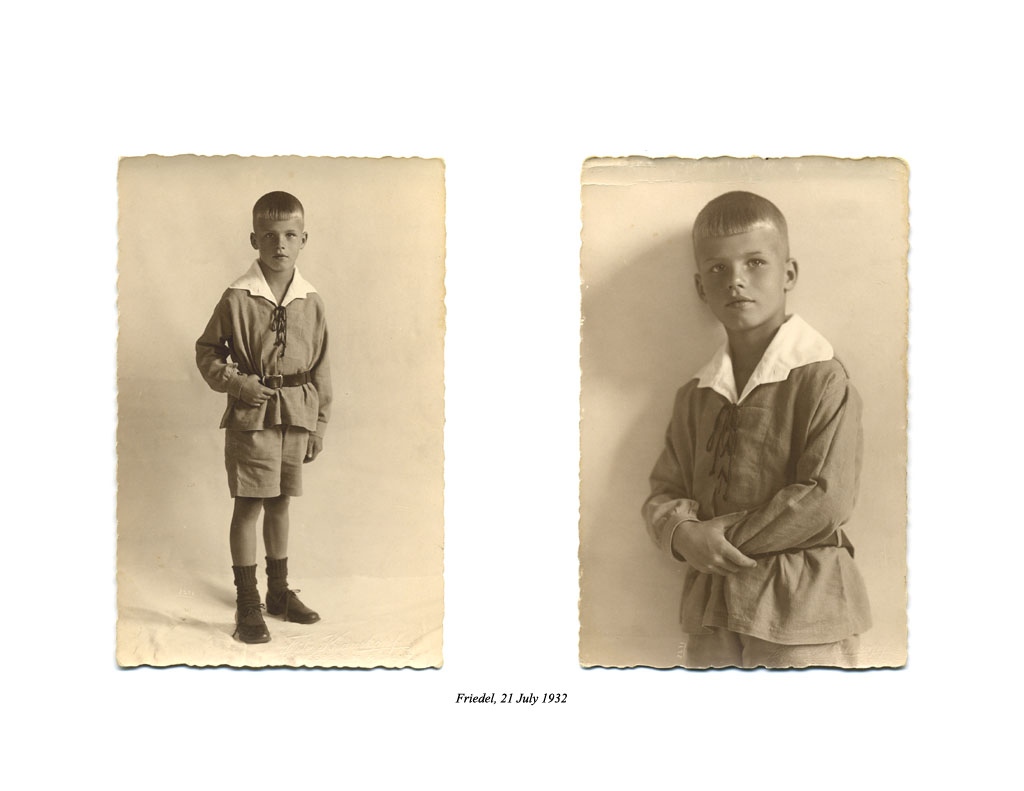
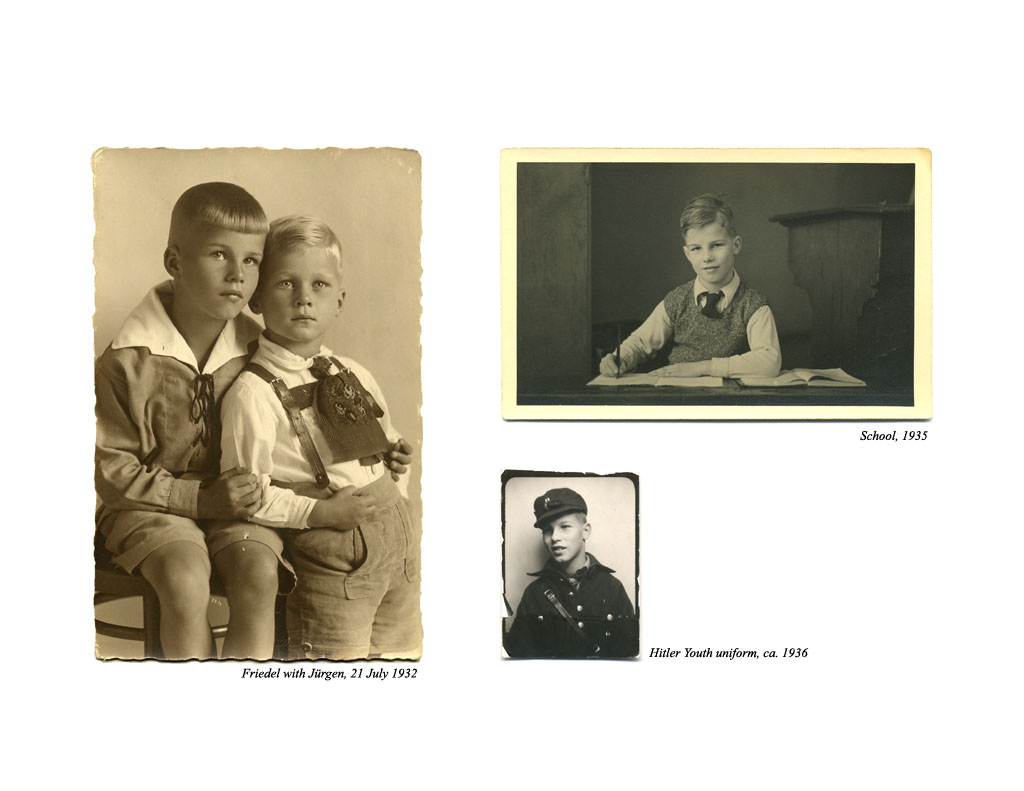
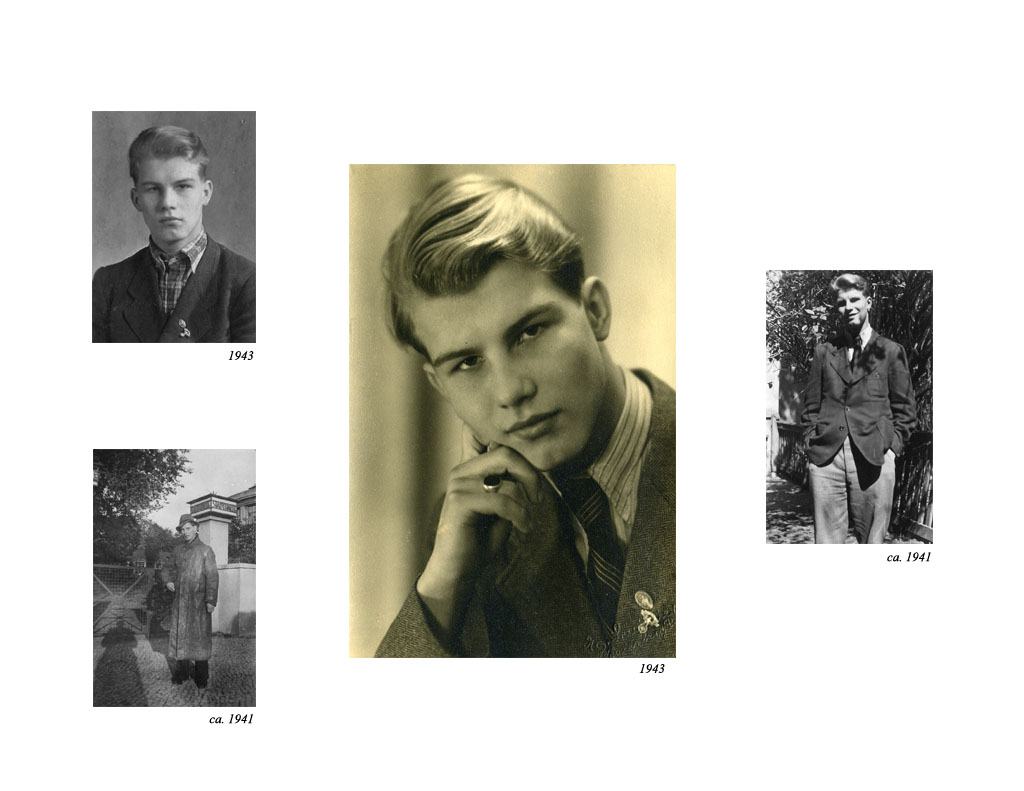
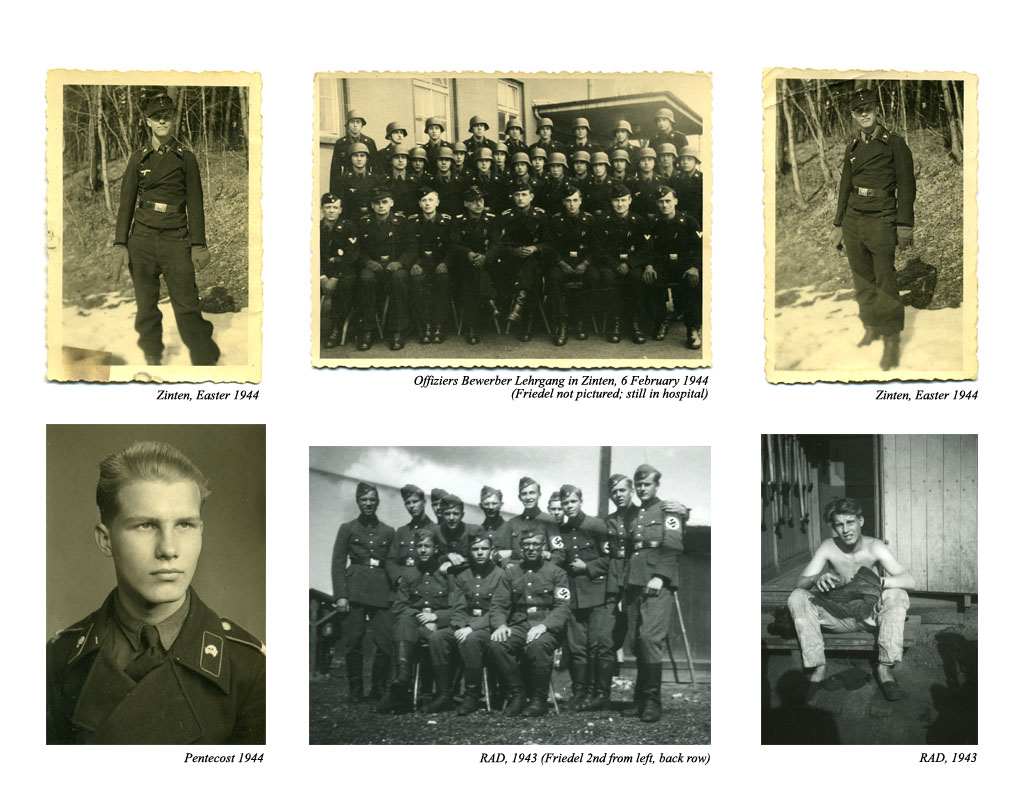
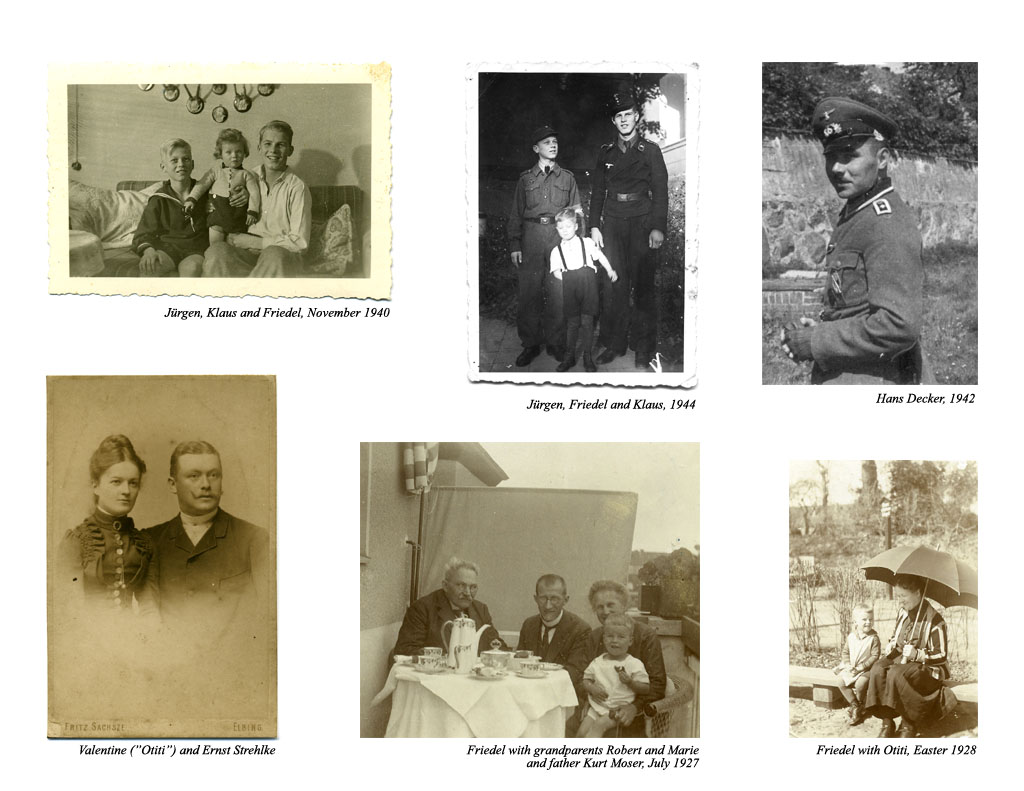
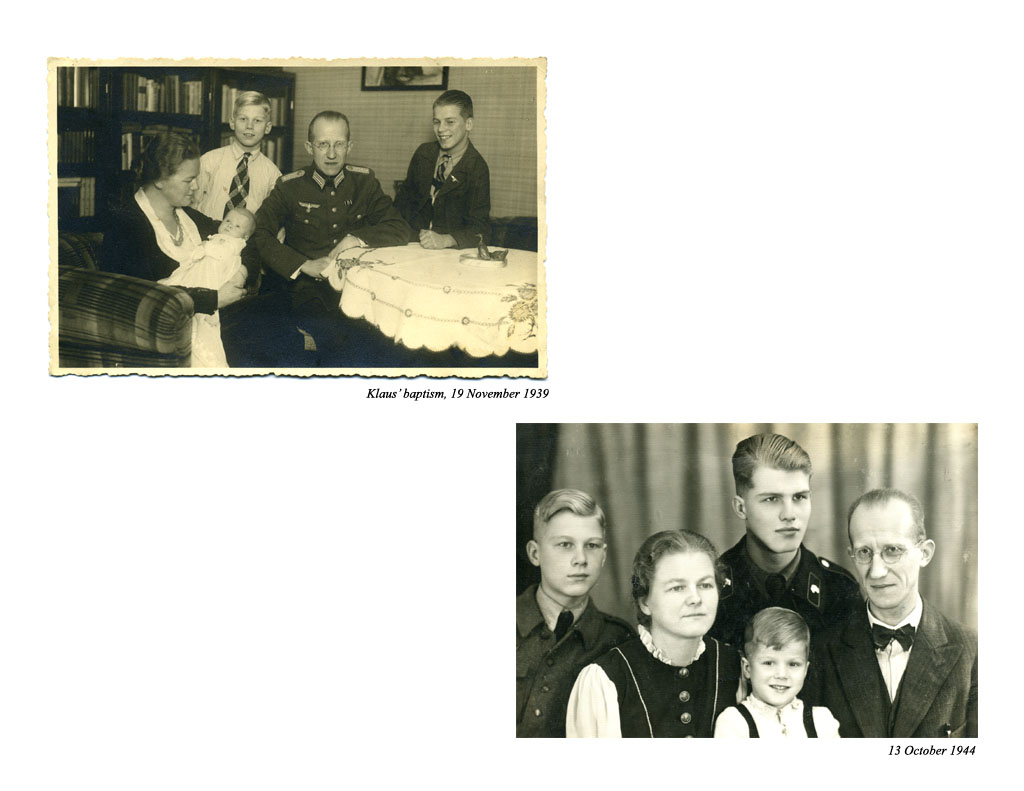
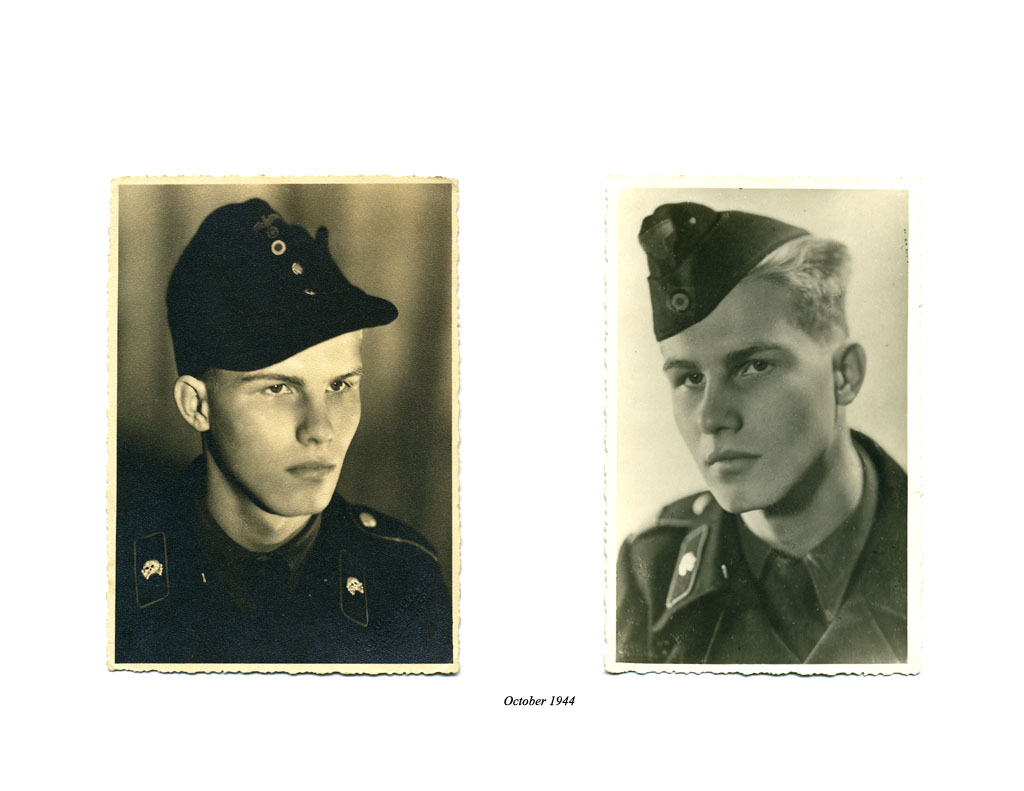
|
Copyright © 1996-1999 by Kim Moser (email) |
Last modified: 5/11/2005 |